

Donor Wall Ideas & Recognition Wall Designs
Every one of these donor recognition wall ideas comes from a wall we actually designed and installed — not a mood board. Browse ideas by format, by design style, and by organization type, then see the real walls that used them.
Jump to a section
- Digital & Interactive Donor Wall Ideas
- Panel Donor Wall Ideas
- Updateable Rail Wall Ideas
- Tile & Individual Name Donor Wall Ideas
- Donor Plaque & Room Naming Ideas
- Modern Donor Wall Ideas
- Traditional Donor Wall Ideas
- Creative & Unique Ideas
- Outdoor Donor Wall Ideas
- Updateable vs Permanent
- Ideas by Budget Range
- Ideas by Organization Type
- How to Choose
- FAQ
What Makes a Donor Recognition Wall Idea Actually Work
A donor recognition wall is a permanent or updateable display that names the people and organizations who funded your work. The design question is not only what it looks like, but how it behaves over the next ten years.
In 25 years of building these walls, the pattern is consistent: the designs that still look right a decade later are the ones that planned for change. A beautiful engraved wall becomes a problem the first year you cannot add a donor to it. So the ideas below start with format, because format determines whether your wall can grow.
After that the same 150-plus installed walls are re-cut the other ways people actually shop: modern versus traditional, creative concepts, outdoor settings, updateable versus permanent, budget range, and organization type. Every image on this page is a wall we designed and installed, so you can click through from an idea to the real project that used it.
If you are comparing formats directly, our digital versus traditional comparison covers the tradeoffs, and the wall size planner helps translate donor count into physical dimensions.
Digital & Interactive Donor Wall Ideas
A digital donor wall replaces engraved names with a screen you control, so recognition changes as your campaign changes. It is the strongest option when your donor list is still growing or when you want to tell impact stories rather than only list names.
Best for: Growing donor lists, annual giving, campaigns that need updating more than once a year.
- Touchscreen directory that lets visitors search for a specific donor name
- Rotating impact stories paired with donor photos and short video clips
- Live campaign thermometer showing progress toward a naming goal
- Tribute and memorial zones that families can visit and photograph
- Hybrid layout: permanent engraved lead gifts beside a screen for annual donors
- Multi-screen video wall in a lobby with synchronized donor content

Hunterdon Healthcare Digital Multi-screen Donor Wall
Flemington, New Jersey

Williams Bay School Interactive Digital Donor and History Wall
Williams Bay, WI
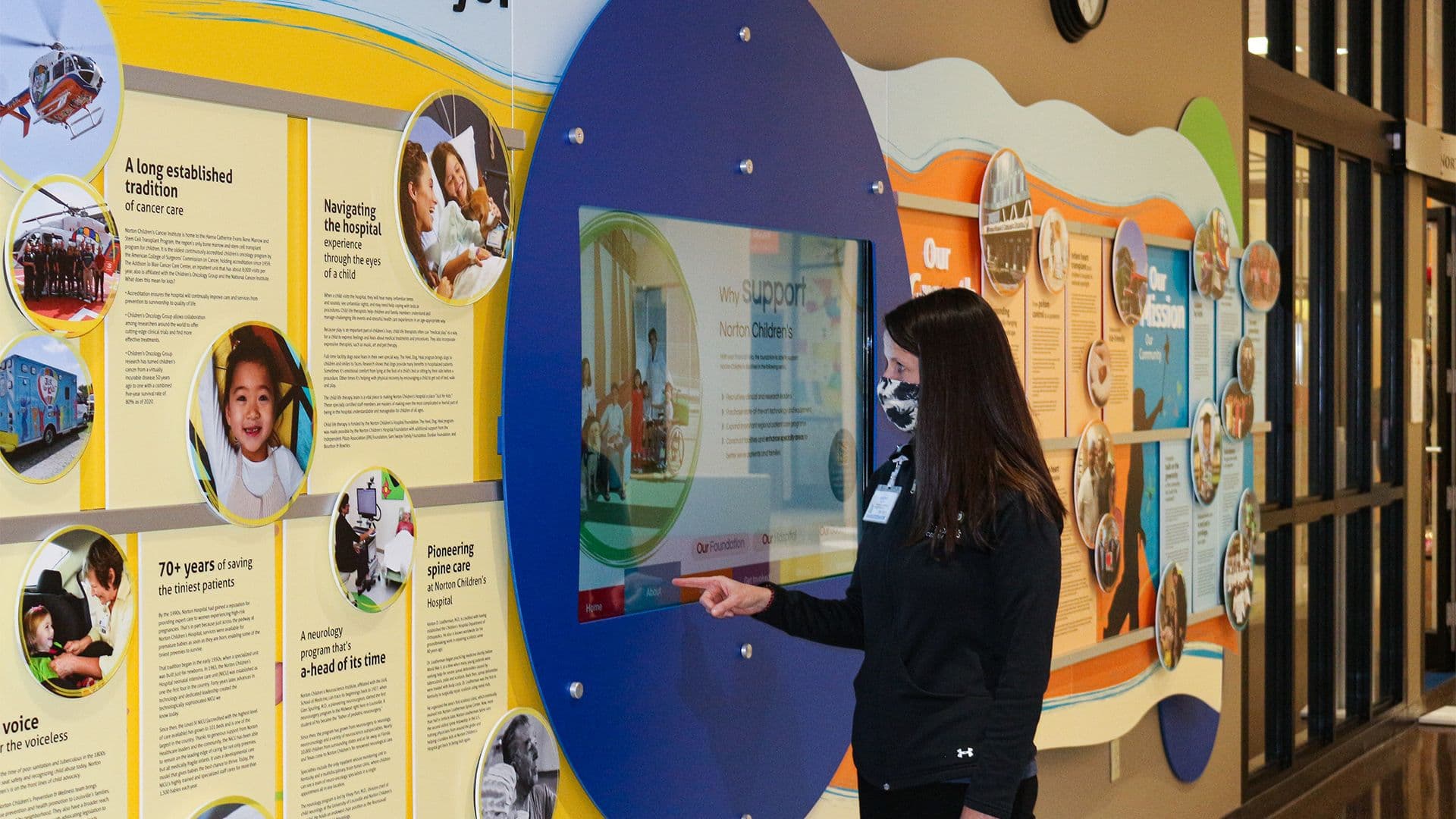
Children Hospital Interactive Digital Donor Wall
Louisville, Kentucky

Joe DiMaggio Childrens Hospital Digital Donor Recognition Wall
Hollywood, Florida
Panel Donor Wall Ideas
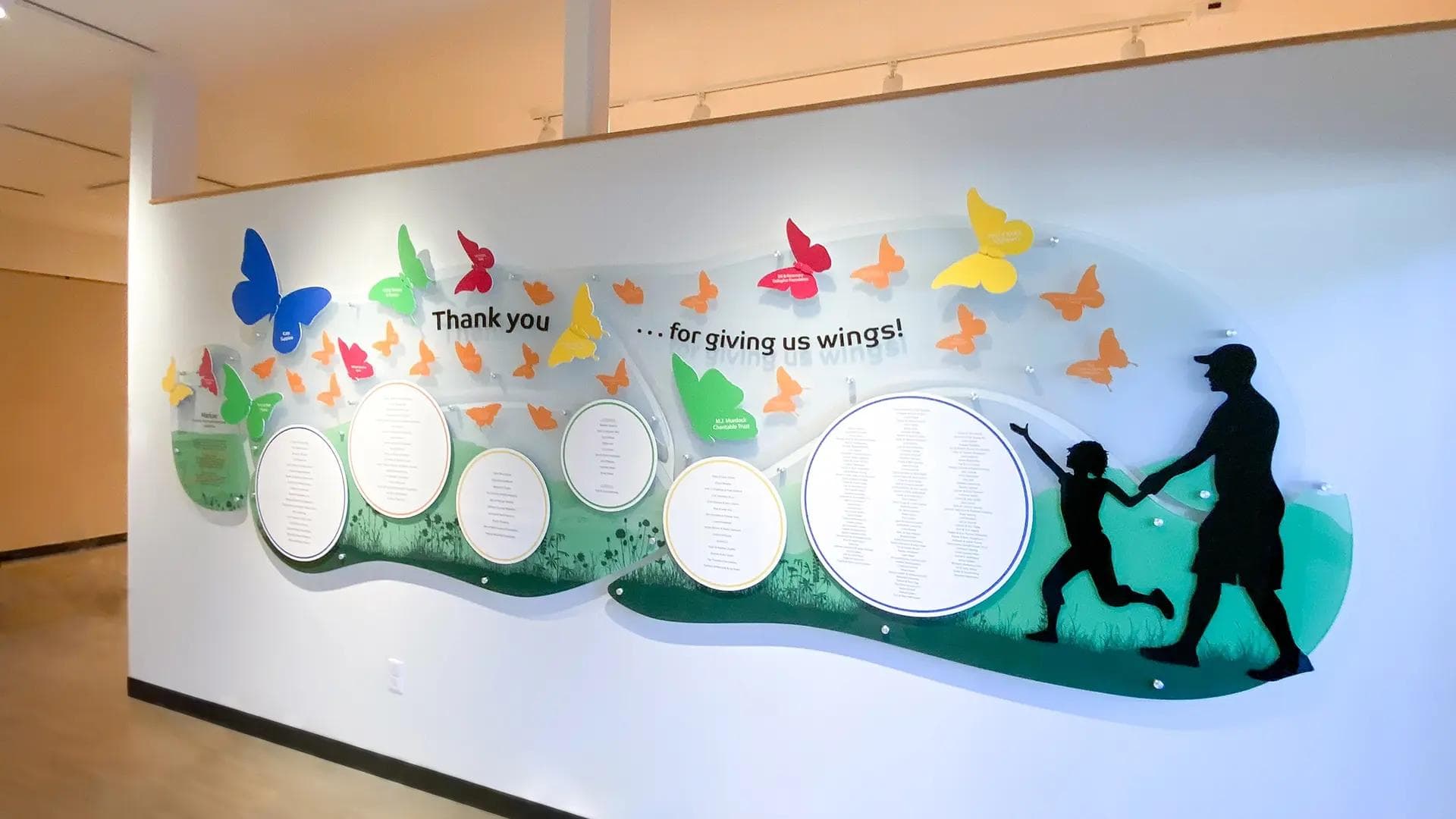
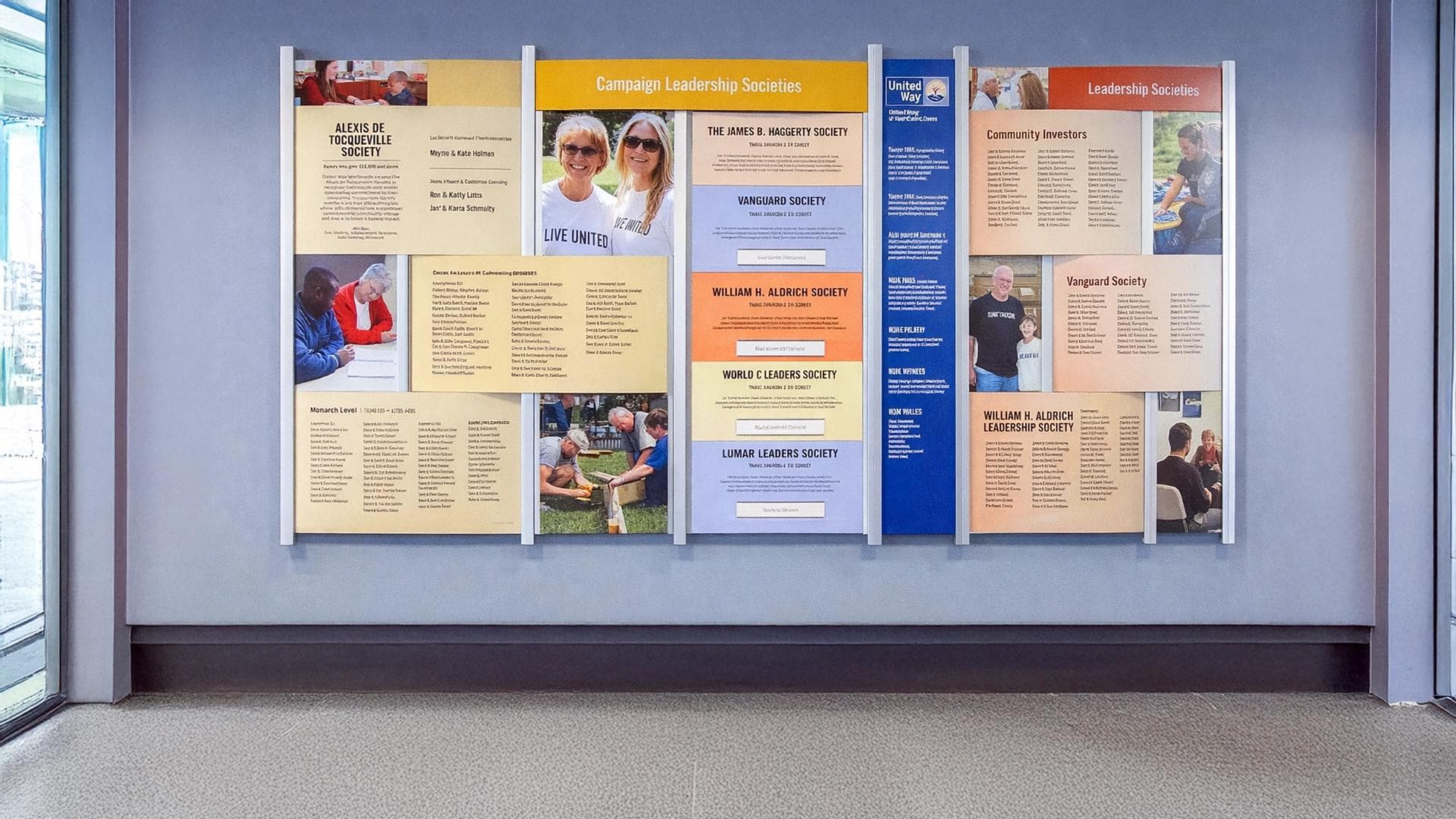
Panel walls are the most flexible physical format. Individual printed or engraved panels are mounted in a composition you design, which means the wall can carry artwork, mission statements, and giving levels alongside donor names.
Best for: Capital campaigns, lobbies and corridors, organizations that want a designed focal point.
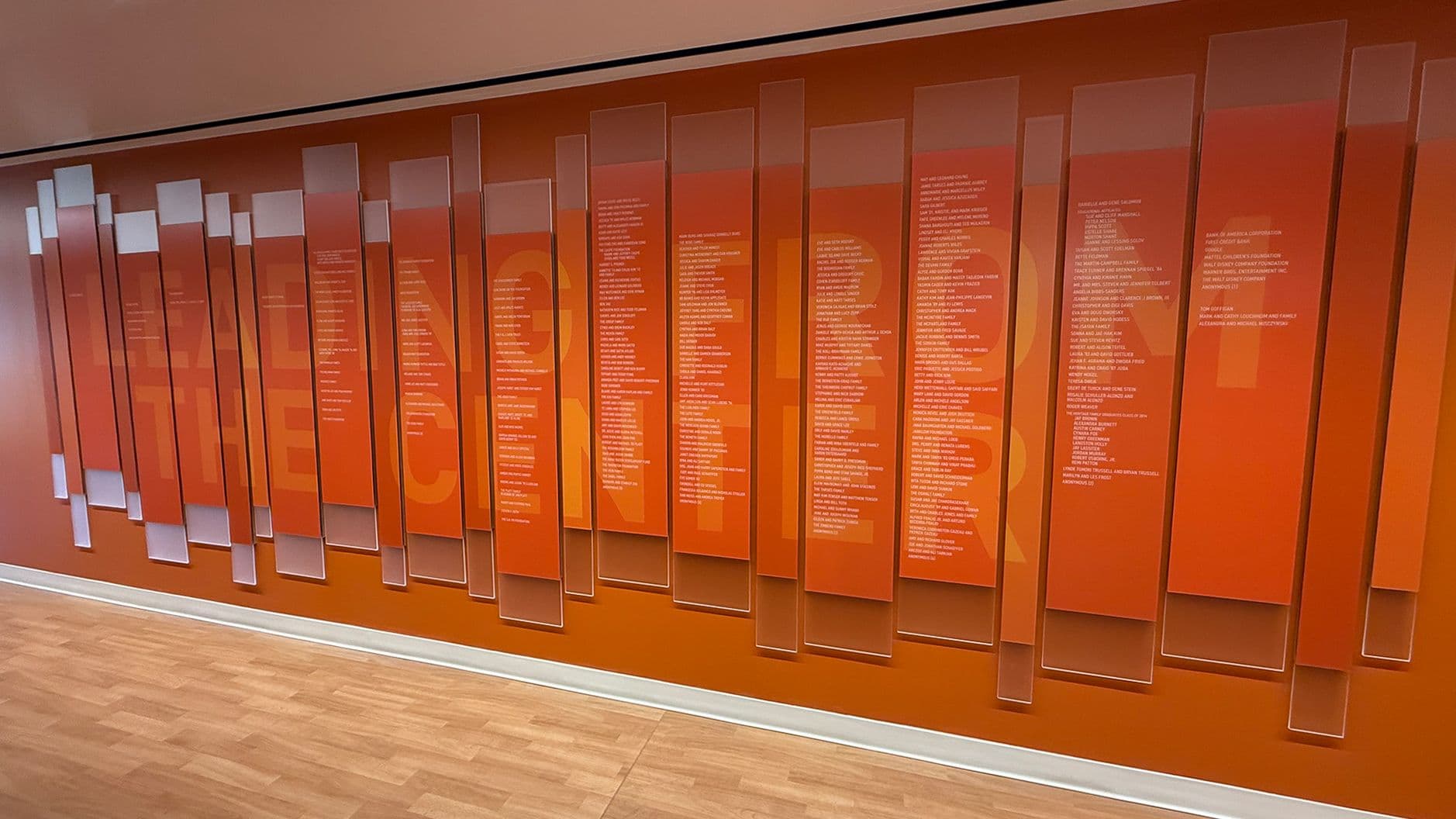
- Layered dimensional panels that cast shadow and add depth to a flat wall
- Translucent acrylic panels over a printed mural or photograph
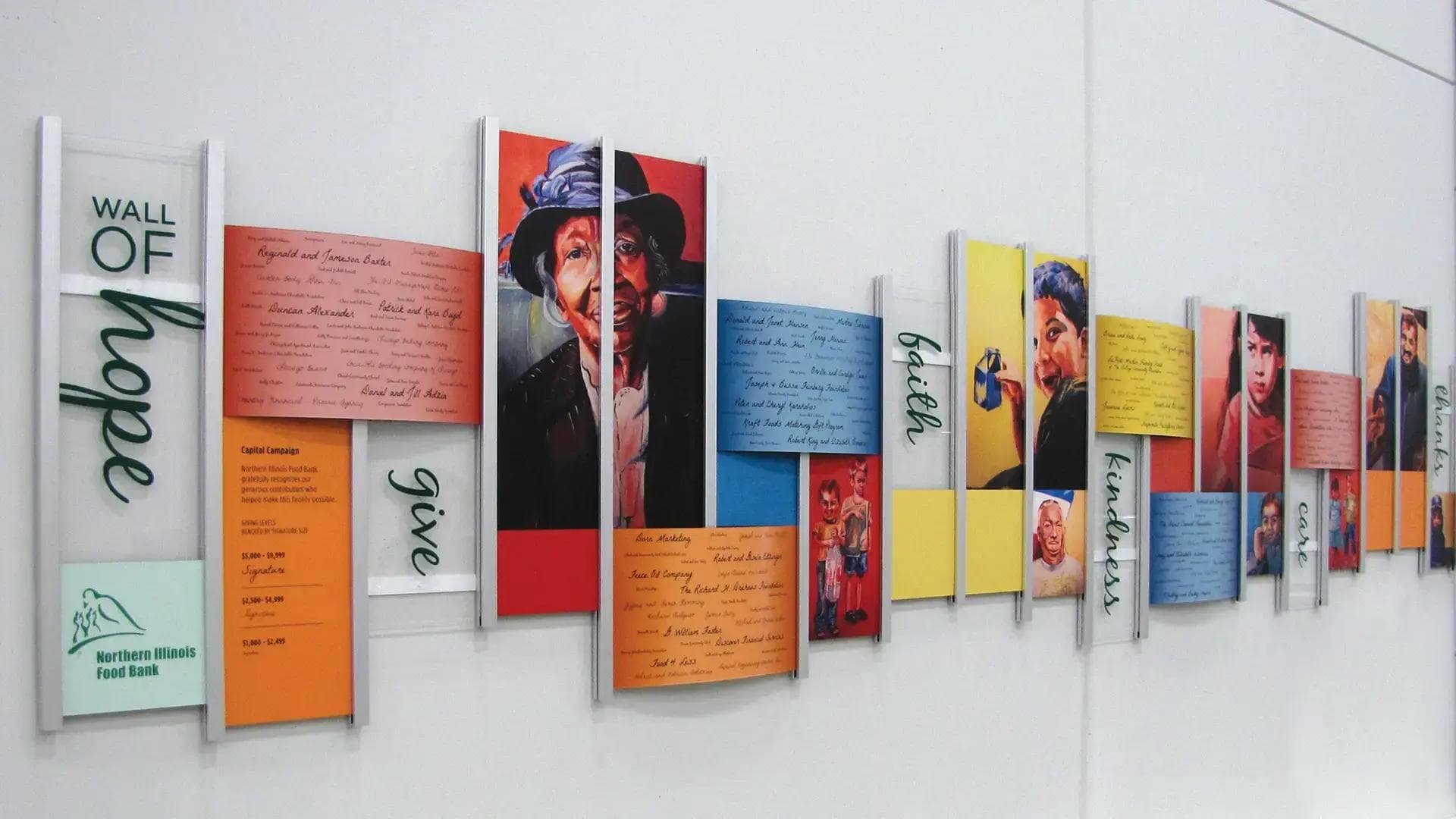
- Color-coded panels where each hue signals a different giving level
- Organic shapes — leaves, hearts, circles, waves — instead of rectangles
- Mission statement and quote panels interleaved with donor name panels
- Branded panels using institutional colors, logo, and mascot artwork



Updateable Rail Wall Ideas
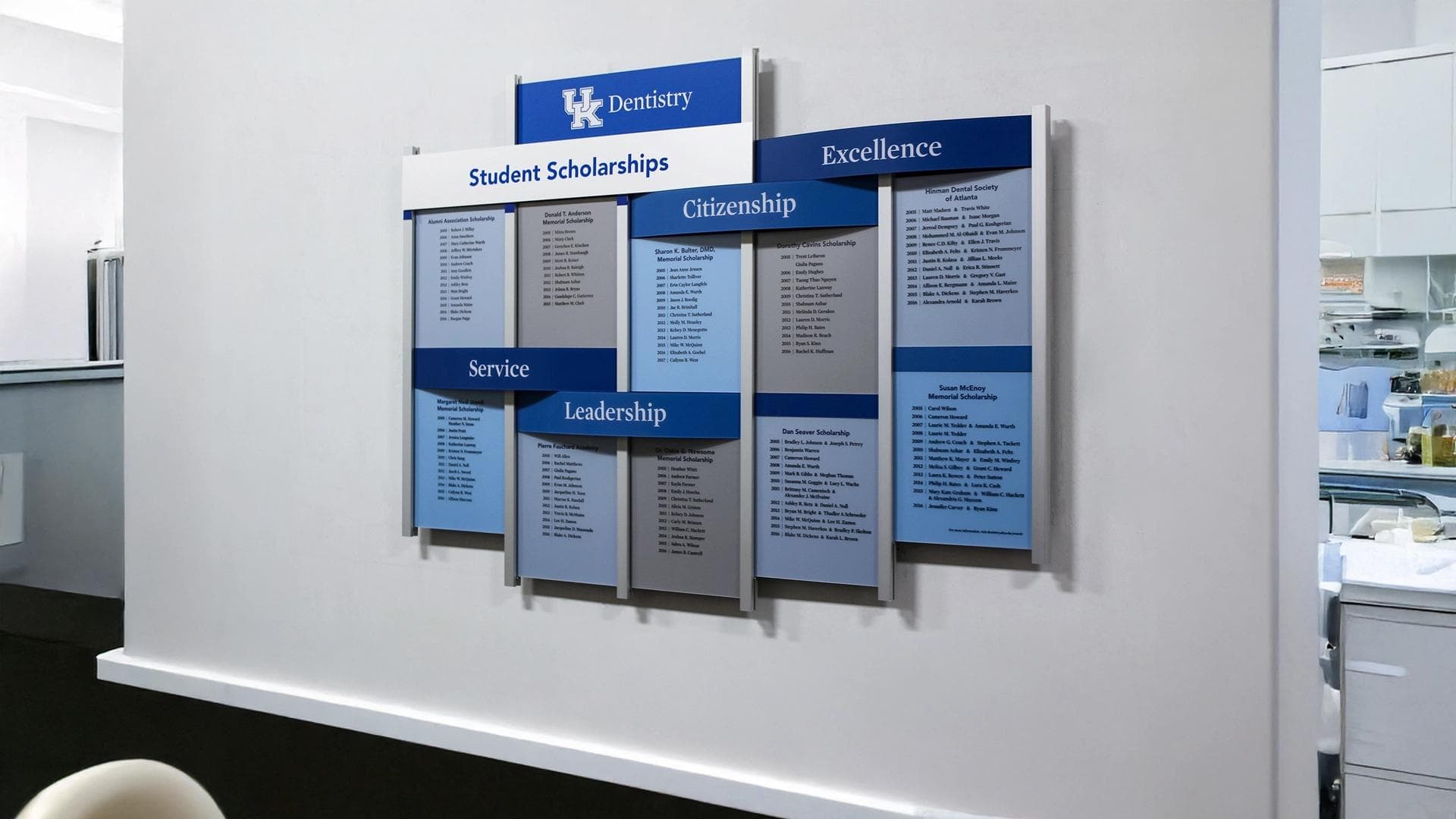
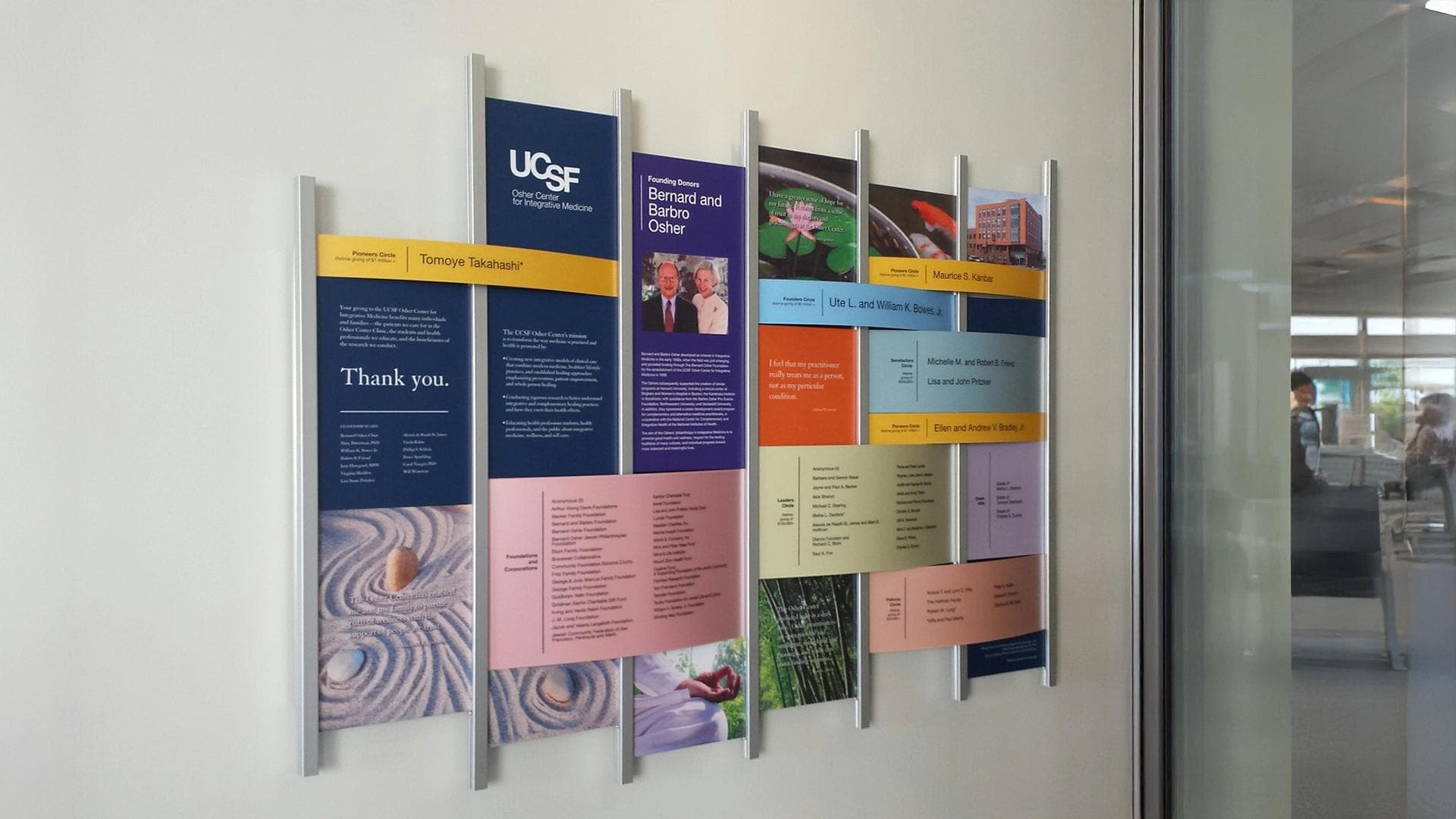
Rail systems hold donor plates in extruded aluminum rails, so a name can be added or swapped without touching the rest of the wall. If your recognition program adds donors every year, this is usually the lowest lifetime cost physical format.
Best for: Annual giving programs, cumulative giving tiers, walls that change yearly.
- Tiered rails where each row represents a cumulative giving level
- Year-by-year annual donor rows added as the program grows
- Mixed plate finishes — brushed aluminum, zinc, colored acrylic — within one system
- A title panel with 3D lettering anchoring the rail composition
- Rails framed by a custom surround so the system reads as designed, not modular
- Reserved empty rail space that signals the wall is meant to keep growing

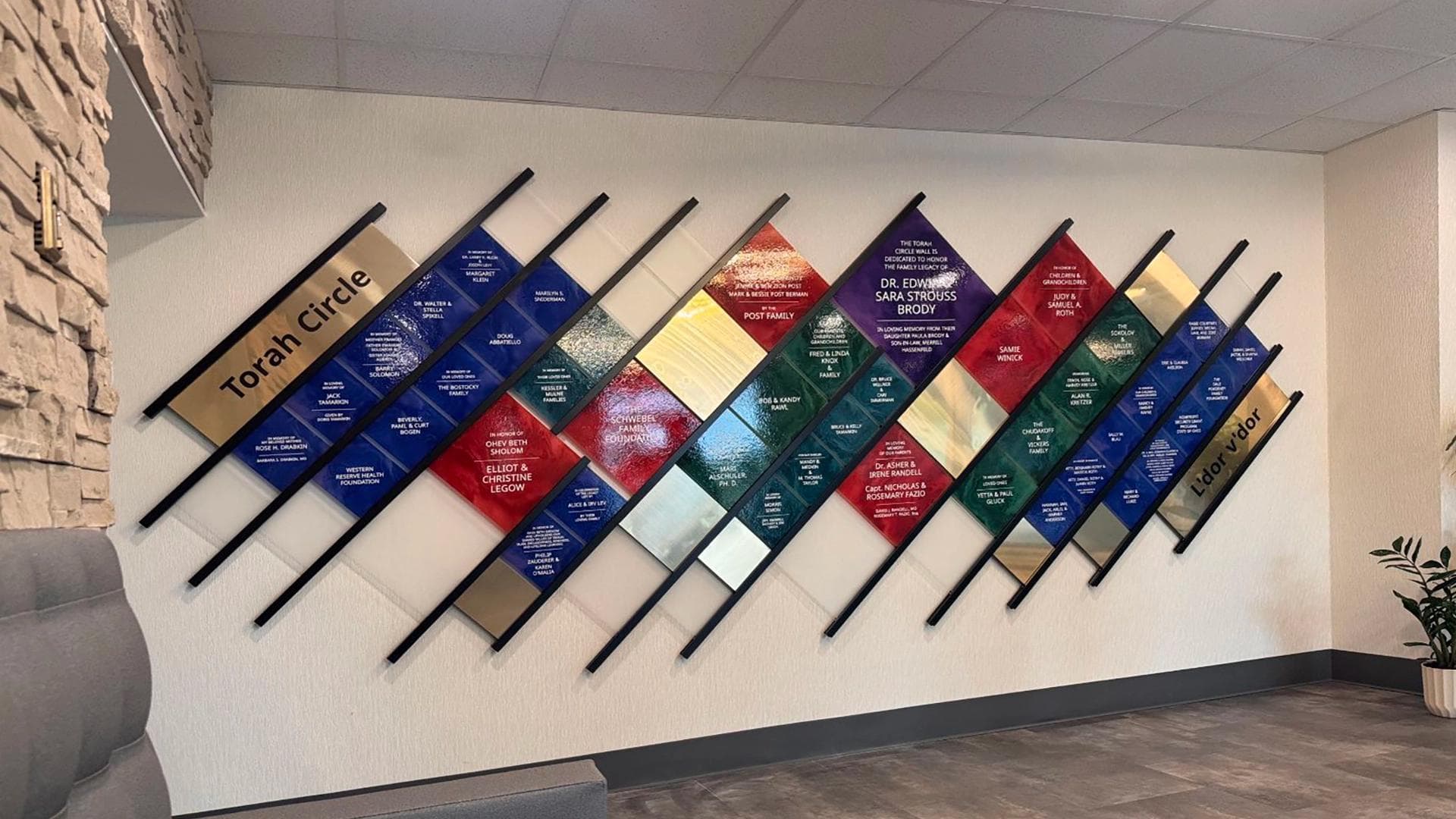
Tile & Individual Name Donor Wall Ideas
Tile walls give every donor a discrete physical piece. The effect is a mosaic that grows over time, which works especially well when you want many small gifts to feel visible rather than aggregated into a list.
Best for: Community fundraising, brick-and-tile campaigns, broad participation drives.
- Mosaic pattern where individual tiles assemble into a larger image or logo
- Hand-painted or custom-printed tiles contributed by students or families
- Shaped tiles — stars, leaves, hearts, waves — tied to your mission
- Quilt-pattern layout that reads as artwork from across the room
- Outdoor-durable tile wall for a courtyard, garden, or playground
- Tiles grouped by neighborhood, class year, or campaign phase


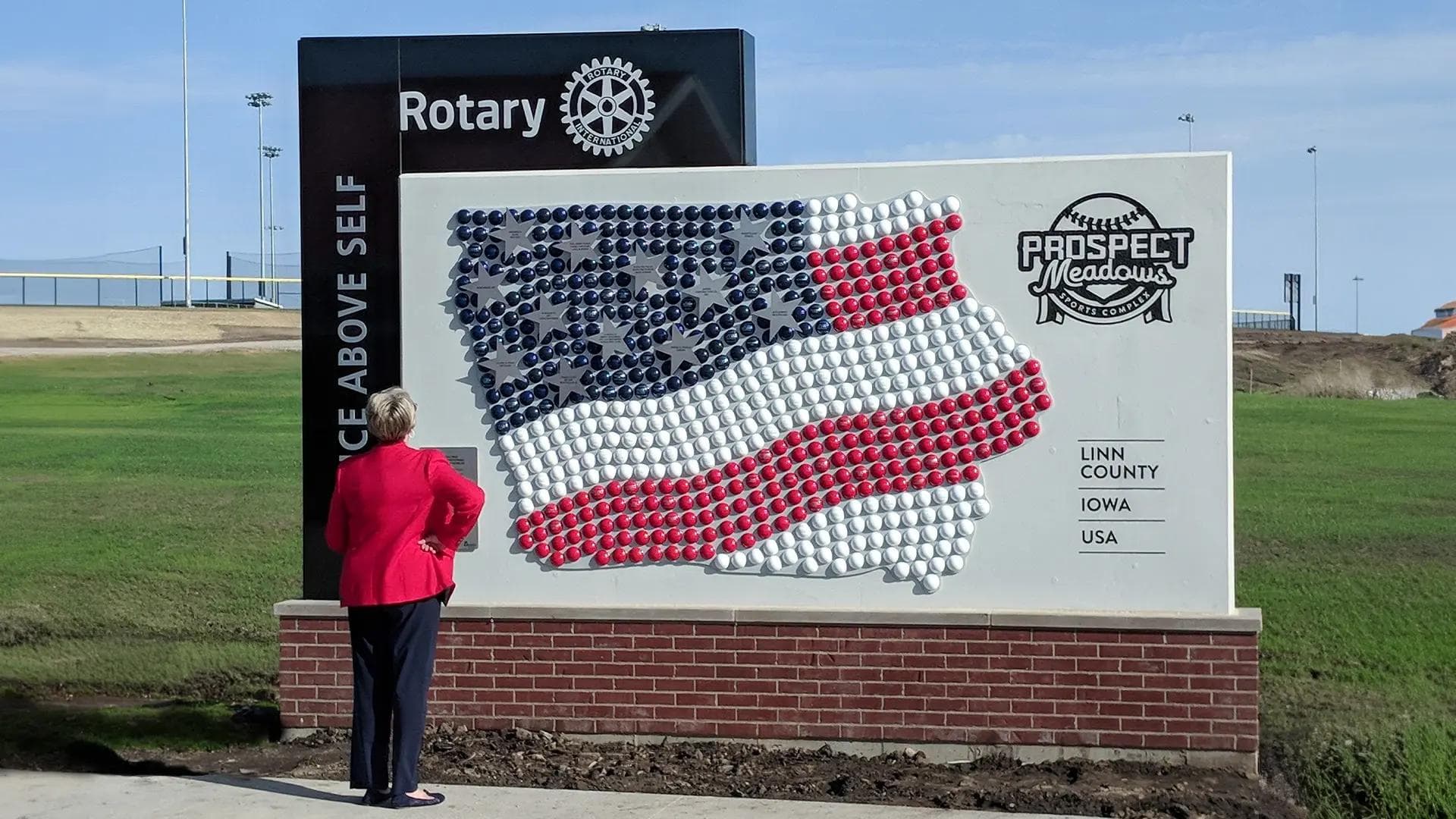

Donor Plaque & Room Naming Ideas
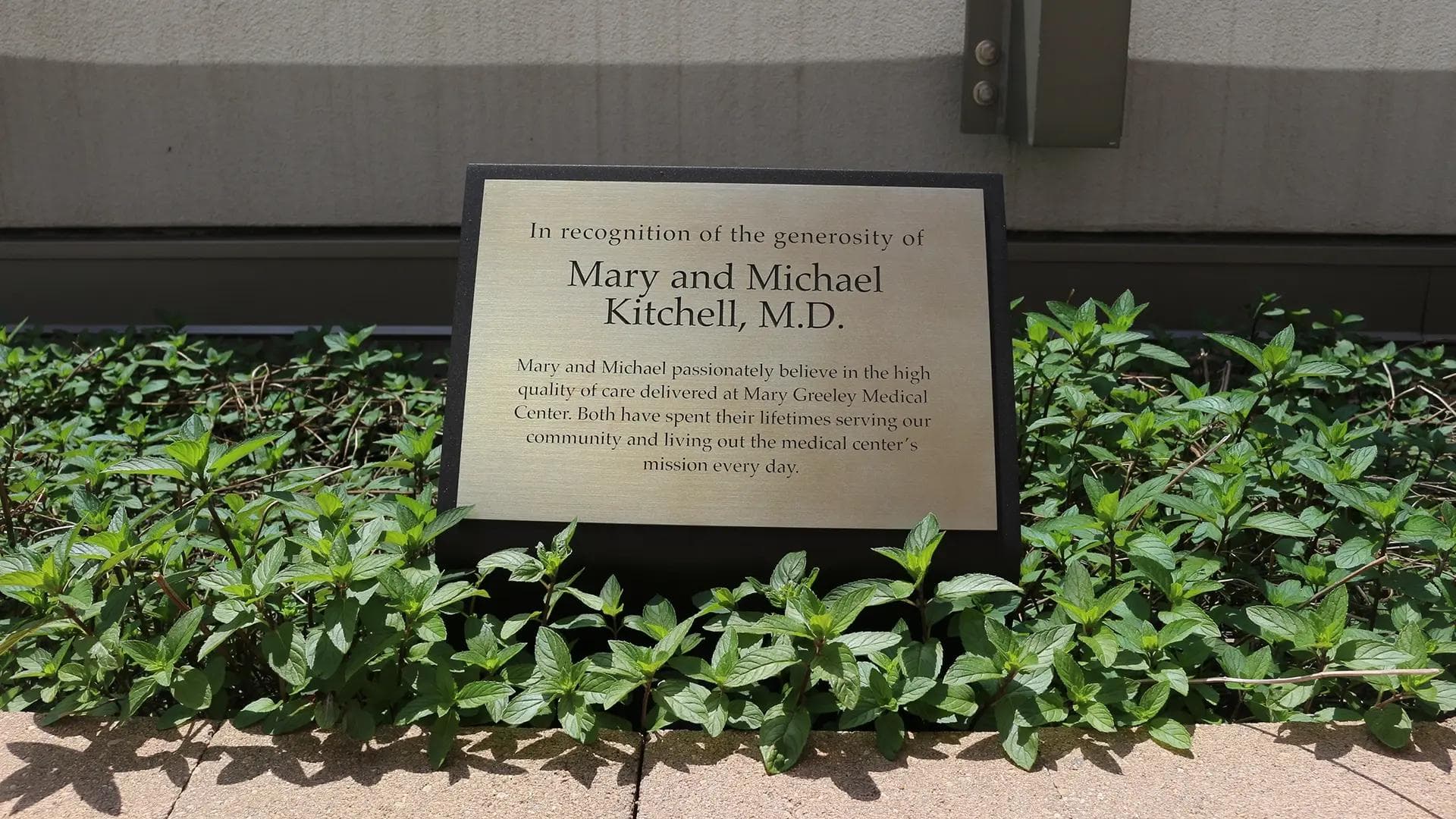
Plaques remain the right answer for individual honors: a named room, a memorial gift, a board of trustees list. Material carries most of the message here, from etched bronze for permanence to printed acrylic for a lighter contemporary look.
Best for: Room naming, memorial gifts, board recognition, single major donors.
- Etched or cast bronze plaque for a permanent named space
- Multi-layered plaque combining wood, acrylic, and metal
- Memorial photo panel pairing a portrait with a tribute inscription
- Room naming plaque coordinated with ADA-compliant wayfinding signage
- Board of trustees plaque with updateable individual name plates
- Outdoor plaque in powder-coated aluminum or granite for gardens and trails


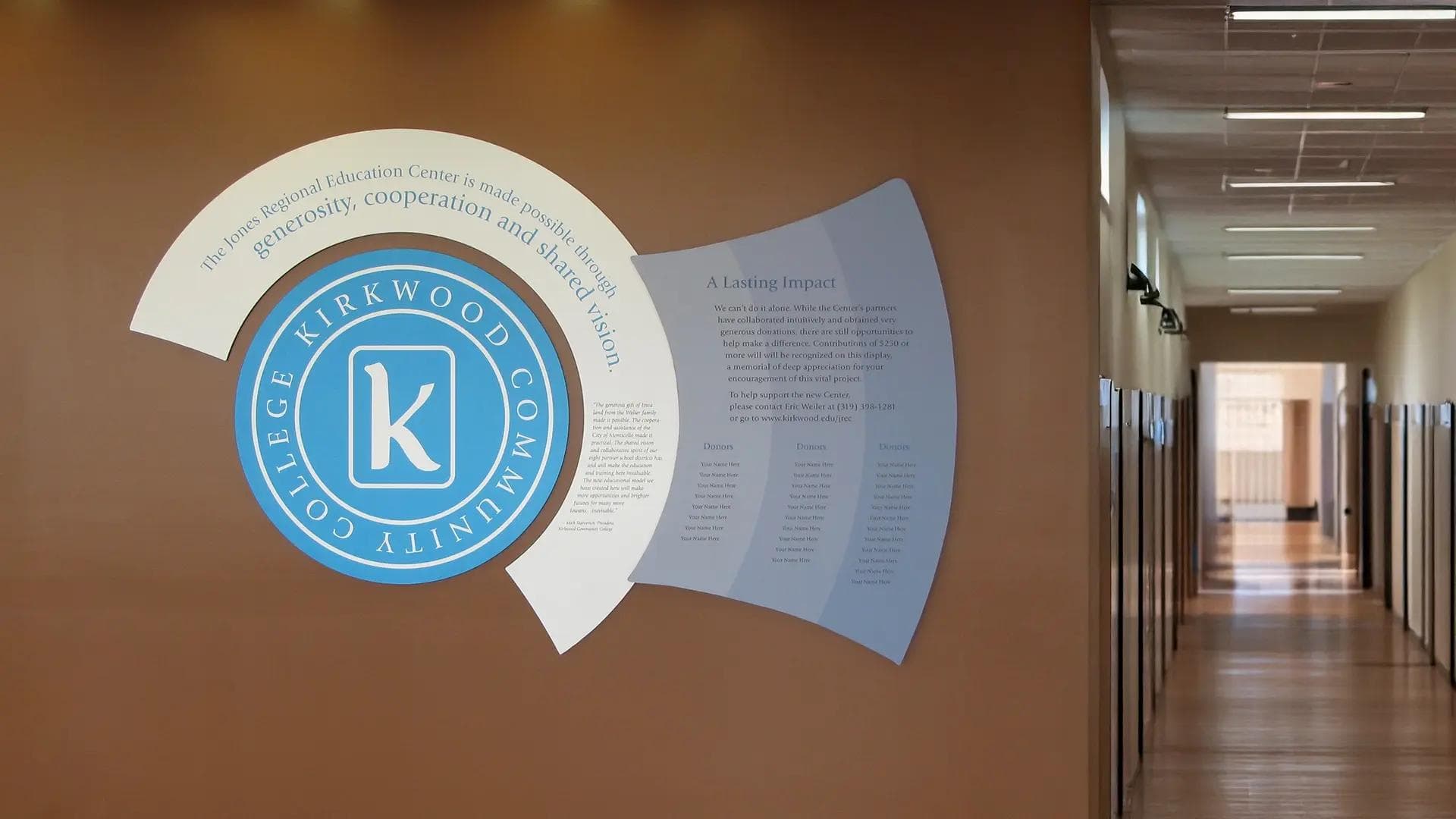

Modern Donor Wall Ideas
“Modern” in donor recognition is less about a specific material and more about restraint, dimension, and light. These are the moves that most reliably make a recognition wall read as current.
Restrained palettes and generous negative space
Modern donor wall ideas tend to subtract rather than add. A limited palette, one strong typeface, and real breathing room around the names reads as more current than a dense grid of engraved plates.
Dimension instead of ornament
Layered panels, standoffs, and 3D lettering create shadow and depth. The wall gains visual interest from its construction rather than from decorative borders or applied graphics.
Integrated lighting
Indirect LED lighting behind panels or along rails makes a wall feel architectural. It also solves a practical problem, since most recognition walls sit in corridors with flat overhead light.
Architectural materials
Wood-look architectural prints, frosted plex, zinc, and non-glare acrylic let the wall belong to the building instead of looking applied to it.
Screens treated as a design element
A digital display set into a custom surround stops reading as a television on the wall. The surround is what makes a digital donor wall feel intentional.
Room to grow, designed in
The most contemporary walls plan for expansion from day one, so adding next year's donors does not visibly disrupt the composition.


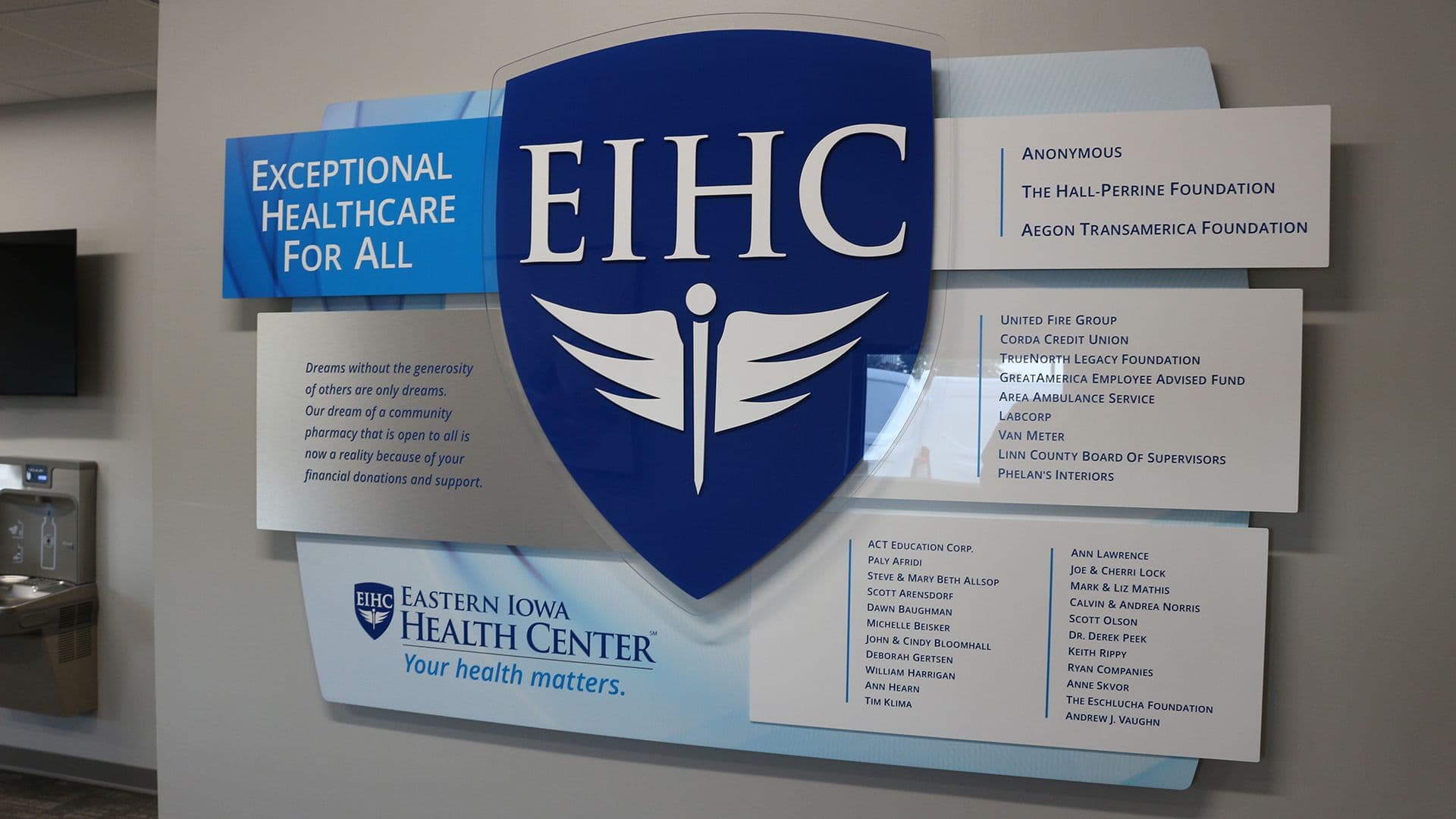
Traditional Donor Wall Ideas
Traditional donor recognition is formal, symmetrical, and permanent: engraved metal on wood or stone, a clear tier hierarchy, and a list that is considered final at installation. It is still the right answer for a board of trustees, a memorial gift, or a named space where the point is that nothing about it will change.
Best for: Named spaces, memorial and legacy gifts, board and trustee recognition, institutions with an established formal design language.
- Etched or cast bronze name plates in a symmetrical grid
- Engraved brass plates on a stained hardwood backer board
- Cut-metal title lettering above a formal donor list
- Giving levels separated by engraved header plates rather than color
- A framed surround with mitred corners so the wall reads as a fixture
- Fired ceramic or engraved stone tiles set into masonry
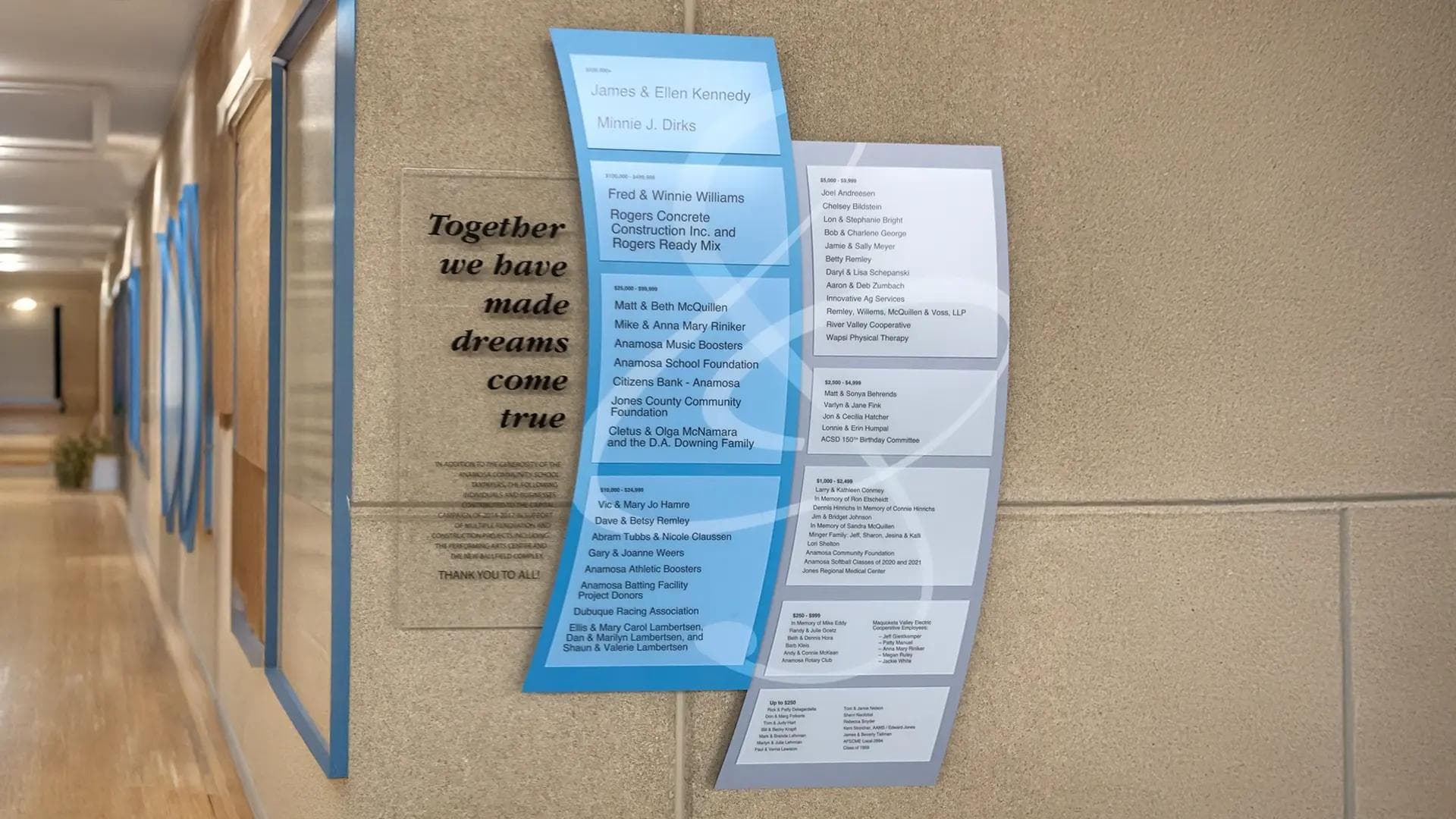
School Performing Arts Donor Wall Plaque
Anamosa, IA
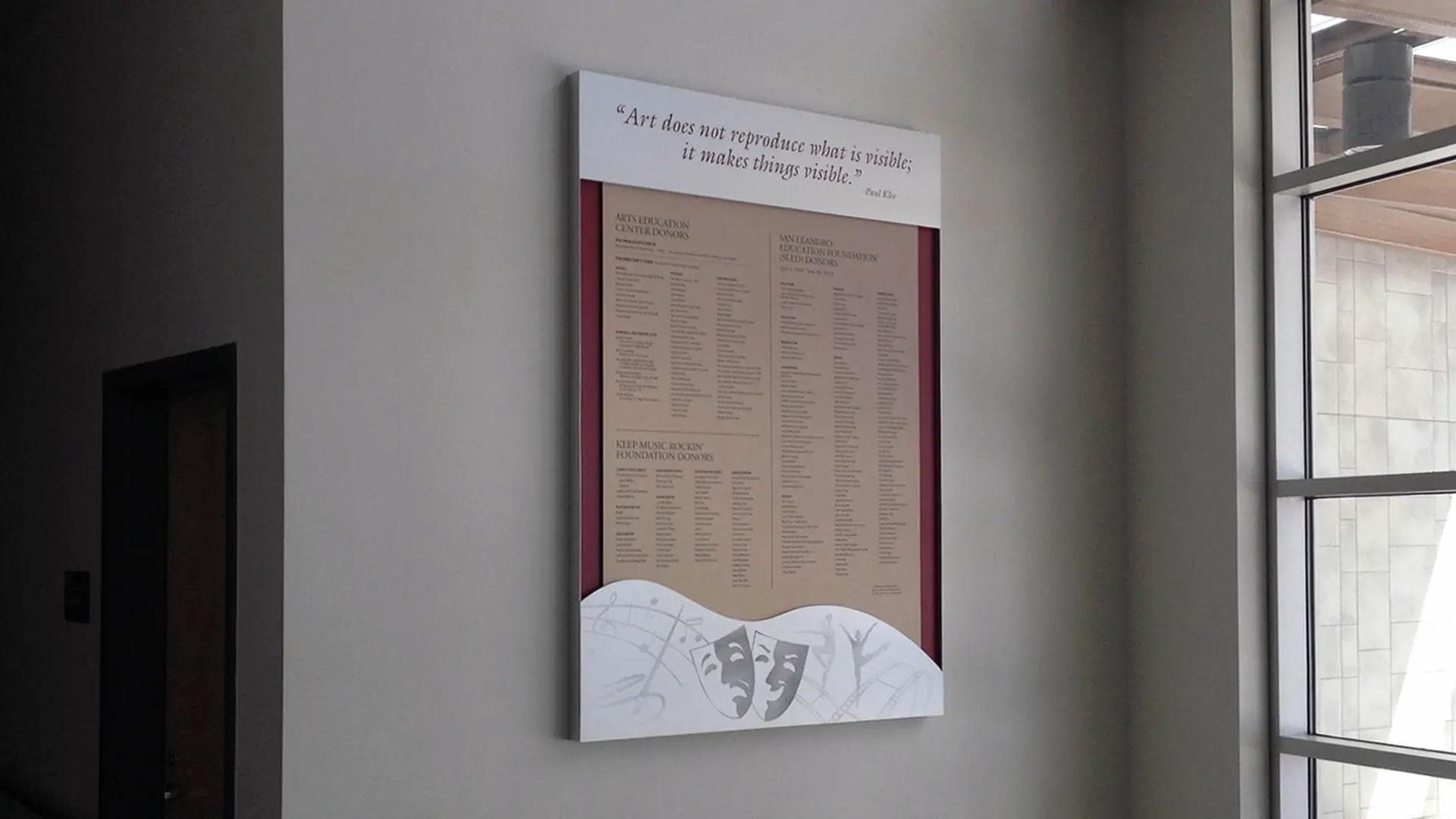
California Fine Arts School Donor Panel
San Francisco, CA
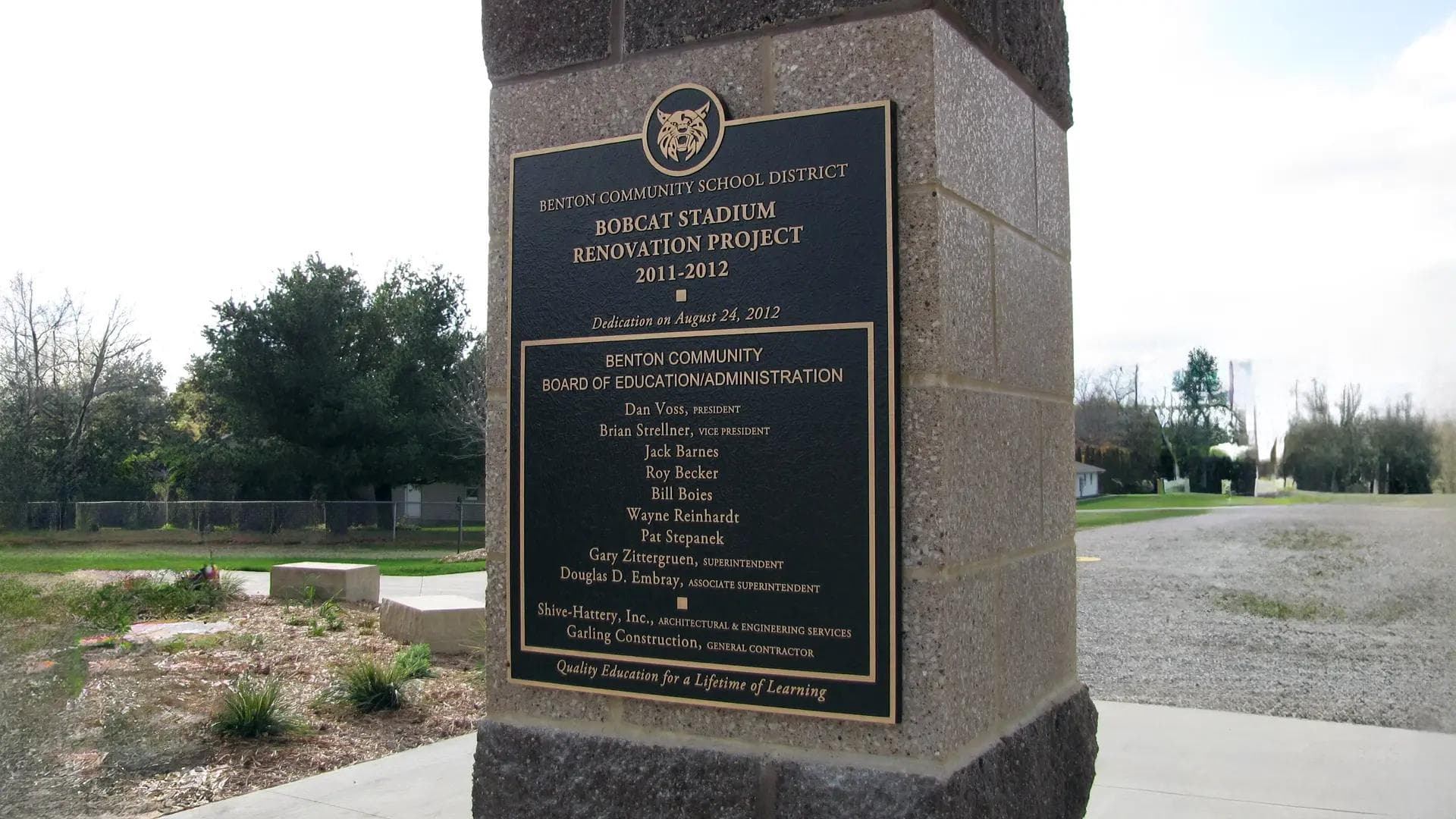
Public School Outdoor Bronze Stadium Memorial Plaque
Benton, IA
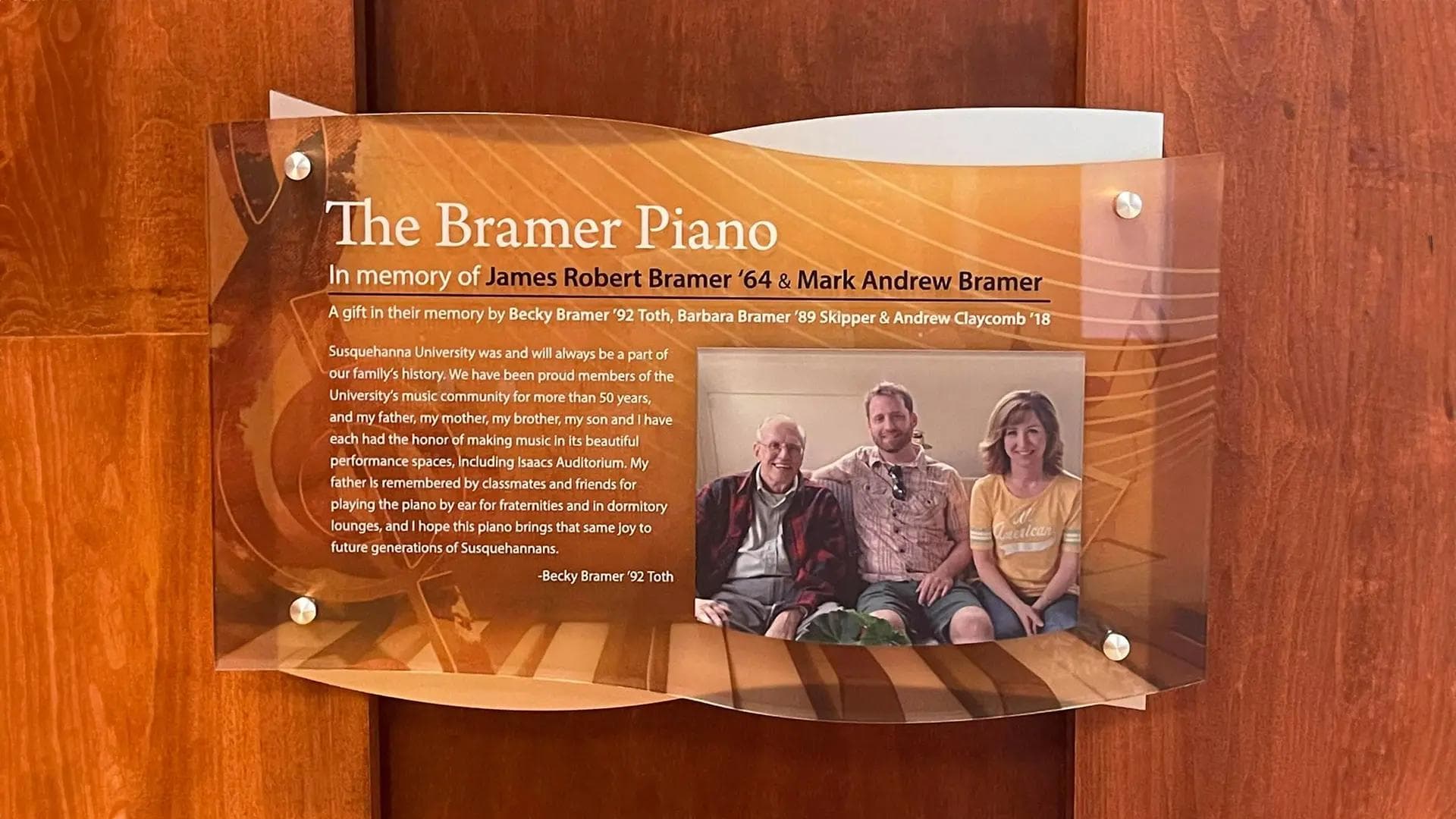
Susquehanna University Memorial Piano Donor Plaque
Selinsgrove, PA
The one caution: traditional does not have to mean unchangeable. Plenty of formal walls use an engraved surround with updateable plates inside it, which keeps the look and removes the problem of adding a donor later. The updateable versus permanent comparison below covers that tradeoff directly.
Creative & Unique Donor Wall Ideas
Creative donor walls work when the concept comes from the organization’s own story rather than from a catalog. Each of these started as a conversation about what the institution actually does.
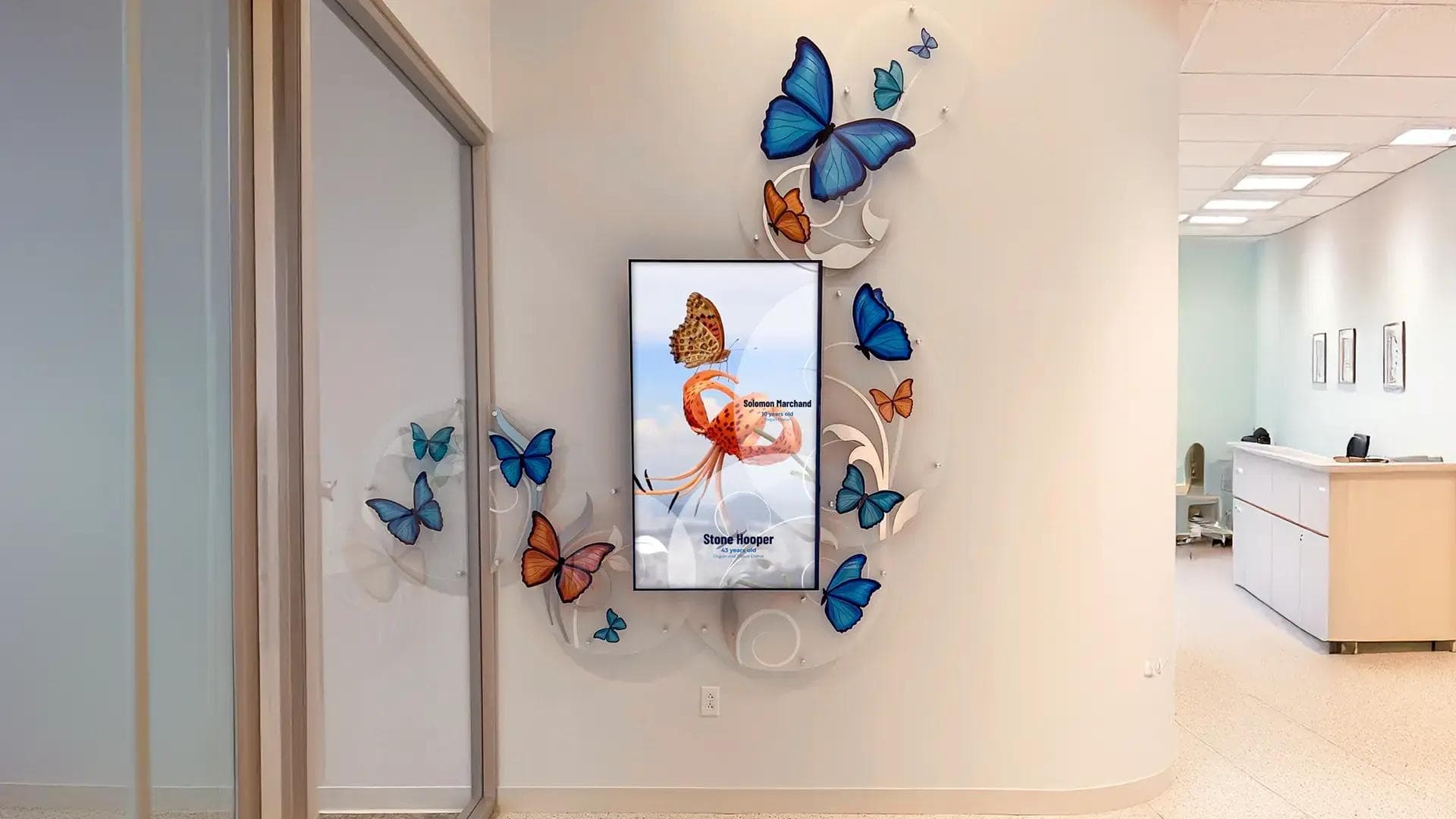
- Three-dimensional butterflies, dragonflies, or birds mounted so they appear in flight
- A metal donor tree where each leaf carries a name and leaves are added over time
- Wall of wishes using wish stars or paper-airplane forms for a children's program
- Translucent panels printed with a community song, poem, or mission text
- Interactive game or quiz wall that teaches mission while recognizing donors
- Magnetic donor elements that staff can rearrange as tiers change
- Curved or corner installations that turn awkward architecture into the feature
- Individual donor hearts, circles, or hands assembling into one larger symbol
- Printed stained glass effect for a faith-based sanctuary or chapel
- Gradient color fields where hue shifts across the wall to signal giving levels
Outdoor Donor Wall Ideas
Outdoor recognition is a materials problem before it is a design problem. UV, moisture, and freeze-thaw cycles will destroy interior-grade acrylic and adhesive within a couple of seasons, so the format list narrows to powder-coated aluminum, engraved stone, weather-sealed tile, and paver campaigns.
Best for: Healing gardens, memorial plazas, trails and parks, athletic facilities, campus entrances.
- Powder-coated aluminum panels rated for UV and freeze-thaw cycles
- Engraved granite or stone monument at a trailhead or garden entrance
- Paver and brick campaigns set into a walkway or memorial plaza
- Weather-sealed tile wall for a courtyard, playground, or healing garden
- Sculptural metal donor tree with leaves added season by season
- Sign-face recognition integrated into existing exterior wayfinding
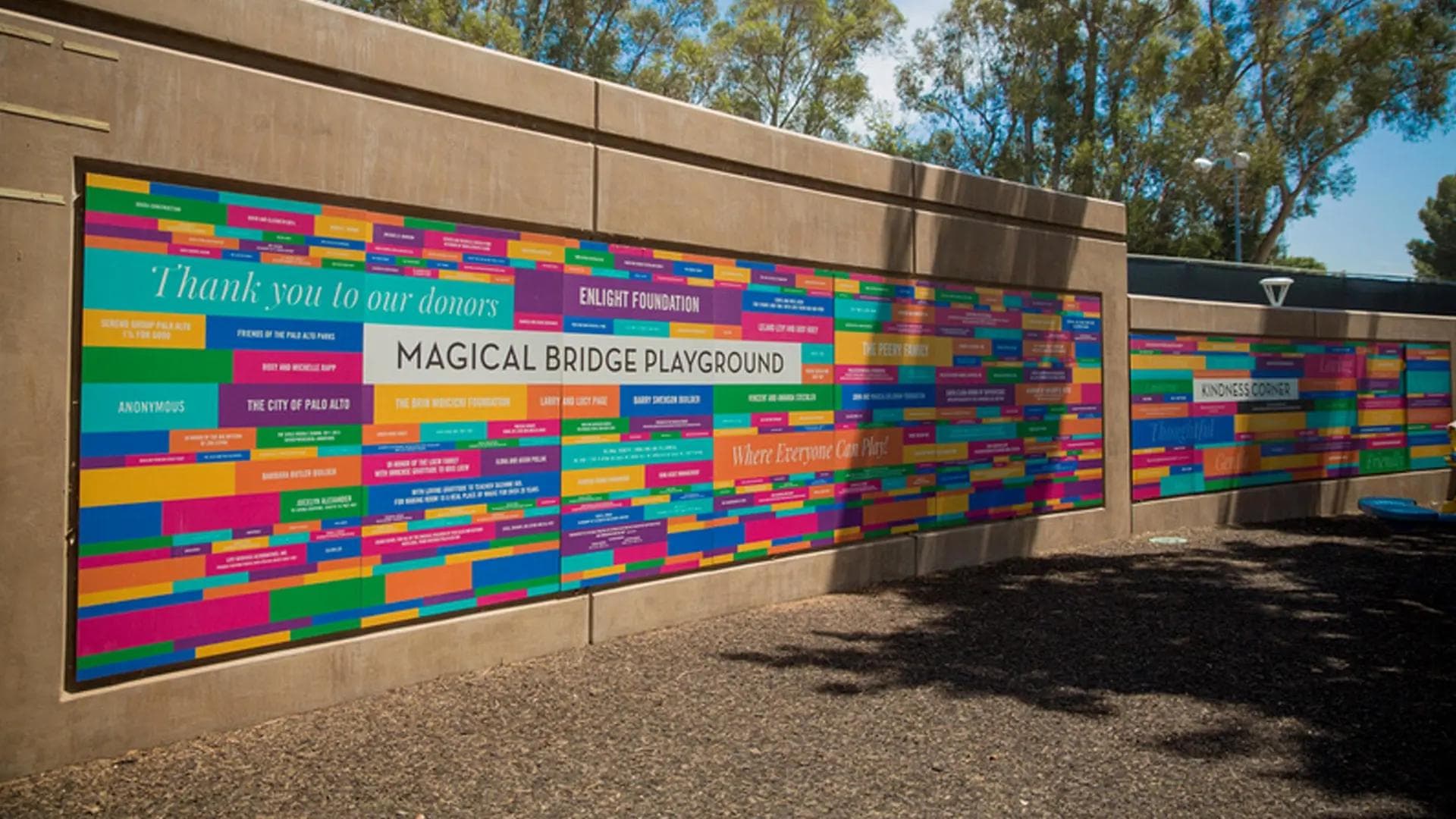
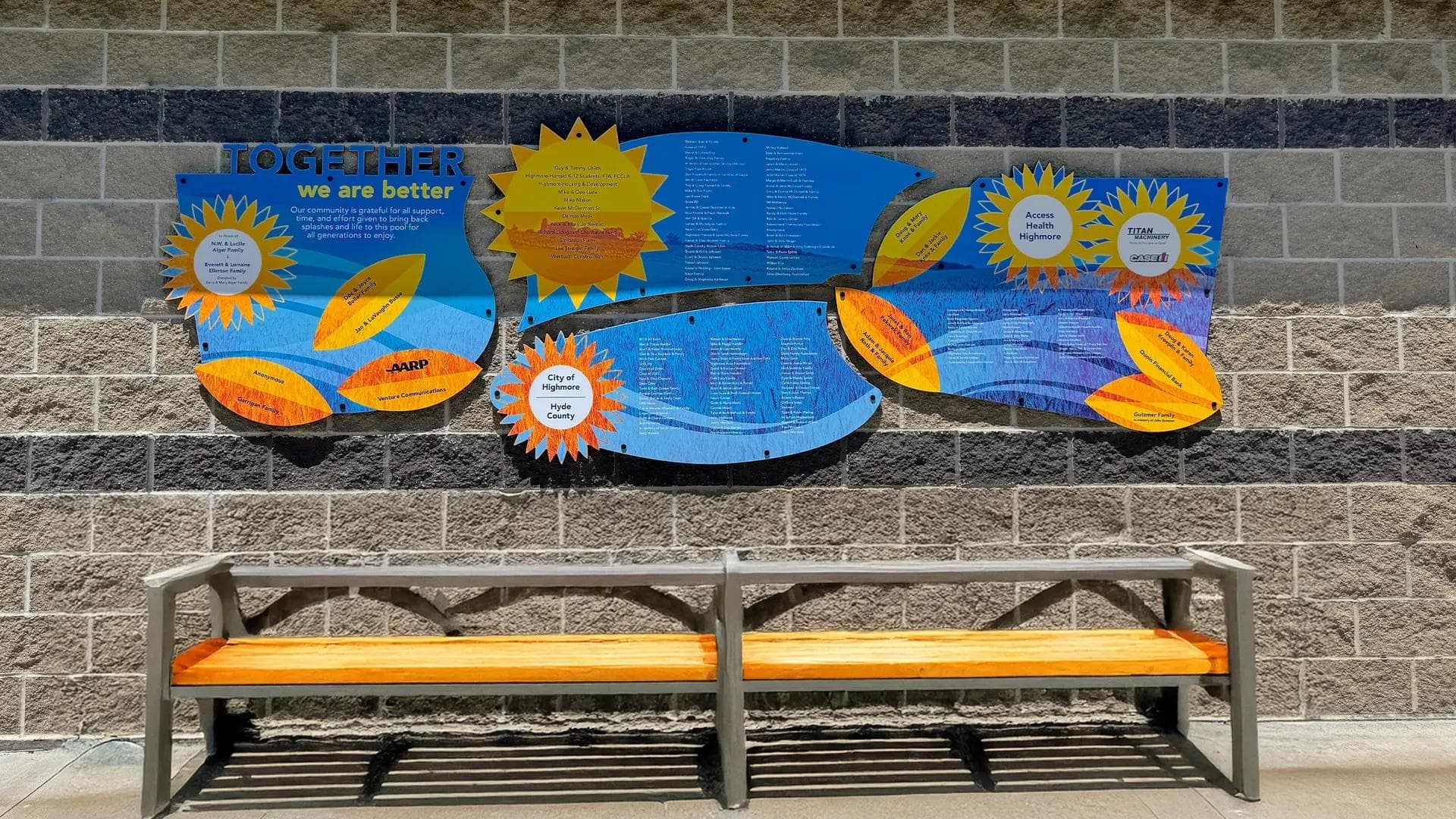
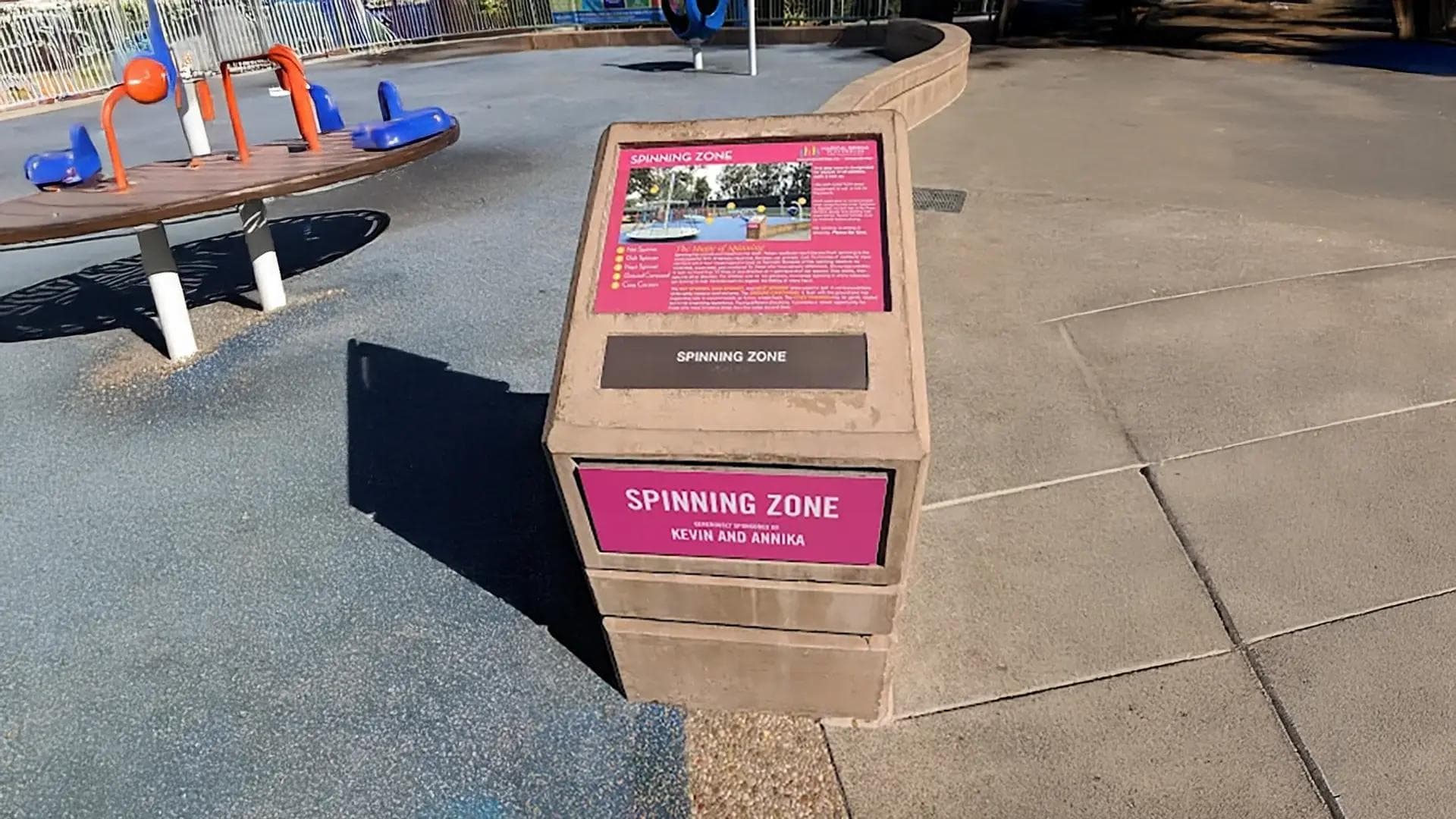
Updateable vs Permanent Donor Wall Ideas
This is the decision that determines the most about your wall, and the one most often made by accident. Of the 154 walls in our gallery, 66 were built with an explicitly updateable system. The organizations that regret their choice are almost always the ones that engraved a list they later needed to add to.
Updateable
Names can be added, corrected, or removed without rebuilding the wall. Costs more up front and usually pays that back the first or second time you add donors.
- Rail systems — individual plates slide out and swap
- Digital walls — content changes remotely, no physical work
- Panel walls with a dedicated updateable zone
- Magnetic or bracket-mounted name elements
Choose this if your donor list grows annually, you recognize cumulative giving, or the campaign is still open.

Permanent
Fixed at installation. Lower cost for the same visual footprint and a weight and finish that updateable systems cannot quite match, at the price of being final.
- Engraved or fired tile set into the wall surface
- Cast and etched bronze plaques
- Cut-metal dimensional lettering
- Engraved stone and granite monuments
Choose this if the list is closed — a completed campaign, a named space, a memorial, a fixed board roster.

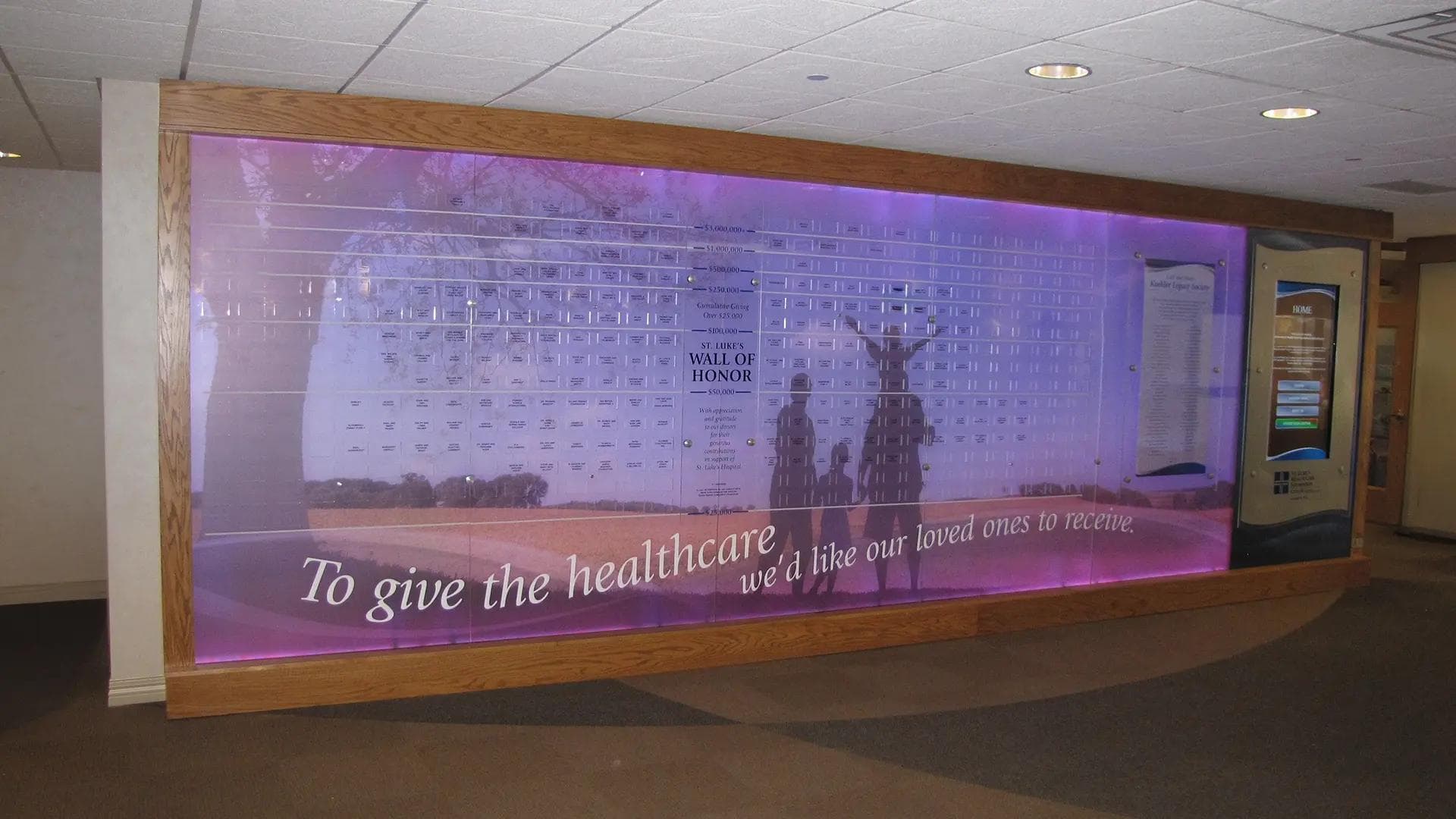
The answer for most organizations is both. A hybrid wall gives lead gifts a permanent engraved treatment and puts annual or growing tiers into a rail zone or a screen, so the wall carries the weight of a traditional installation without becoming obsolete. Our digital versus traditional comparison walks through the lifetime cost of each path.
Donor Wall Ideas by Budget Range
Budget is driven by format, size, and how updateable the wall needs to be far more than by style. A creative concept does not cost more than a plain one; a bigger wall in a harder material does. These are real ranges, and each tier includes the moves that get you the most wall for the money.
Plaques and small tile installations
Entry rangeA single named-room plaque, a memorial panel, or a small tile set is the least expensive way to recognize donors well. Cost scales with the number of pieces and the material, so a printed acrylic plaque and an etched bronze one of the same size are not close in price.
- One plaque per named space rather than a single consolidated wall
- Printed acrylic instead of cast bronze where permanence is not the point
- A tile campaign you add to as gifts arrive, spreading cost across years
Panel walls
$3,000 – $8,000This is where most first donor walls land. A basic panel wall typically starts around $3,000 to $8,000, which buys a designed composition, printed or engraved panels, and a title treatment sized for a lobby or corridor.
- Fewer, larger panels rather than many small ones
- Print rather than engrave the tiers that will change
- Reserve blank panel positions now so expansion is not a redesign
Updateable rail systems
From $8,000Rail systems start at $8,000 for four feet, priced at $2,000 per linear foot for the first eight feet and $1,500 per foot after that, including the rails, custom name plates, header signage, and a custom powder-coat finish. The premium over a panel wall usually pays for itself the first time you add donors without reordering the wall.
- Buy the rail length you will need in five years, not the length you need today
- Standardize on one plate size so reorders are simple and cheap
- Add a printed graphic surround to lift a modular system into a designed one
Digital and interactive walls
$10,000 – $50,000+A fully custom digital donor wall ranges from $10,000 to $50,000 or more. The figure spans display hardware, a media player, software, the custom surround, and content design, so screen count and how much interactive content gets authored drive most of the variance.
- Start with one screen and a strong surround rather than three bare displays
- Pair engraved lead gifts with a screen for annual donors to split the budget
- Budget a recurring line for content updates, not just the install
For a number specific to your project, the donor wall budget calculator works from your wall dimensions, donor count, and format, and the wall size planner tells you whether the names will actually fit before you commit to a format.
Donor Recognition Design Ideas by Organization Type
The same format behaves differently depending on the building and the giving program around it. These are the constraints that tend to drive design in each sector.
Hospitals & Healthcare
Healthcare donor recognition design has to work in corridors with heavy traffic and infection-control requirements. Sealed, wipeable surfaces and digital displays with remote updates carry well here, and impact storytelling resonates more than name lists alone. This is our largest body of work — 56 installed hospital and health system walls.

Blank Children's Hospital Interactive Donor Wall
Des Moines, Iowa
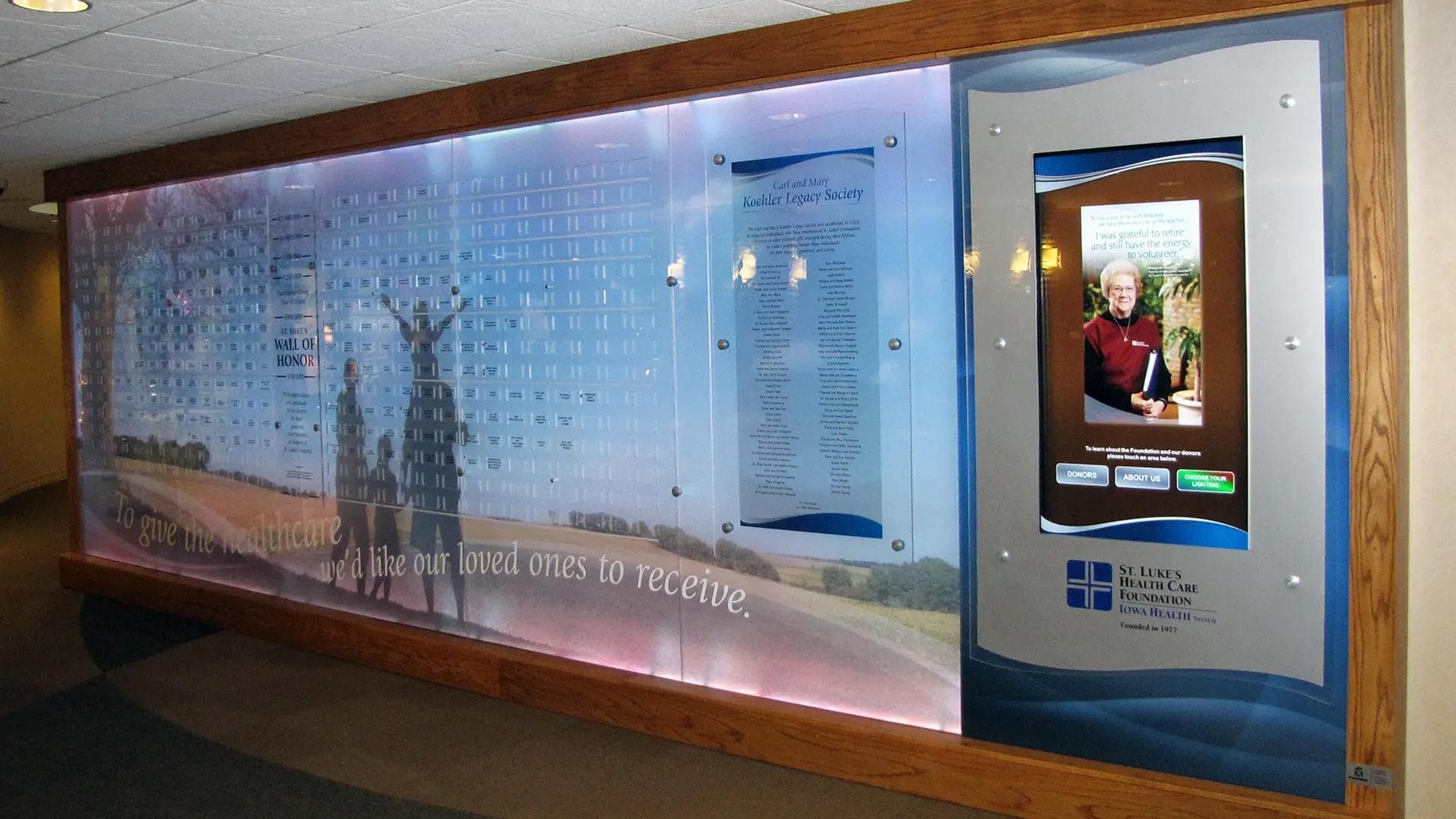
St. Lukes Hospital Foundation Cumulative Digital Donor Wall
Cedar Rapids, Iowa
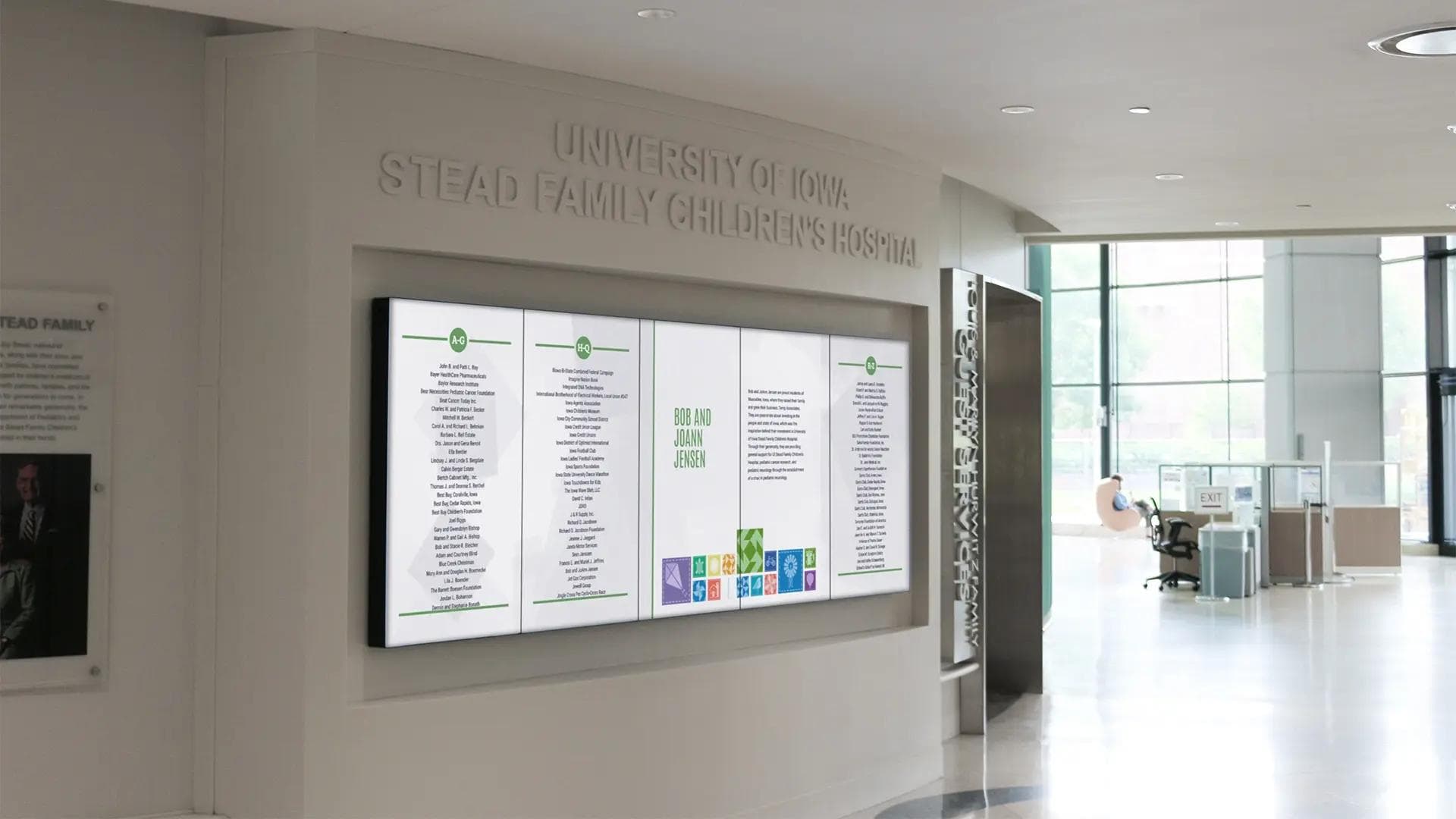
Childrens Hospital Digital Donor Recognition Wall
Iowa City, Iowa
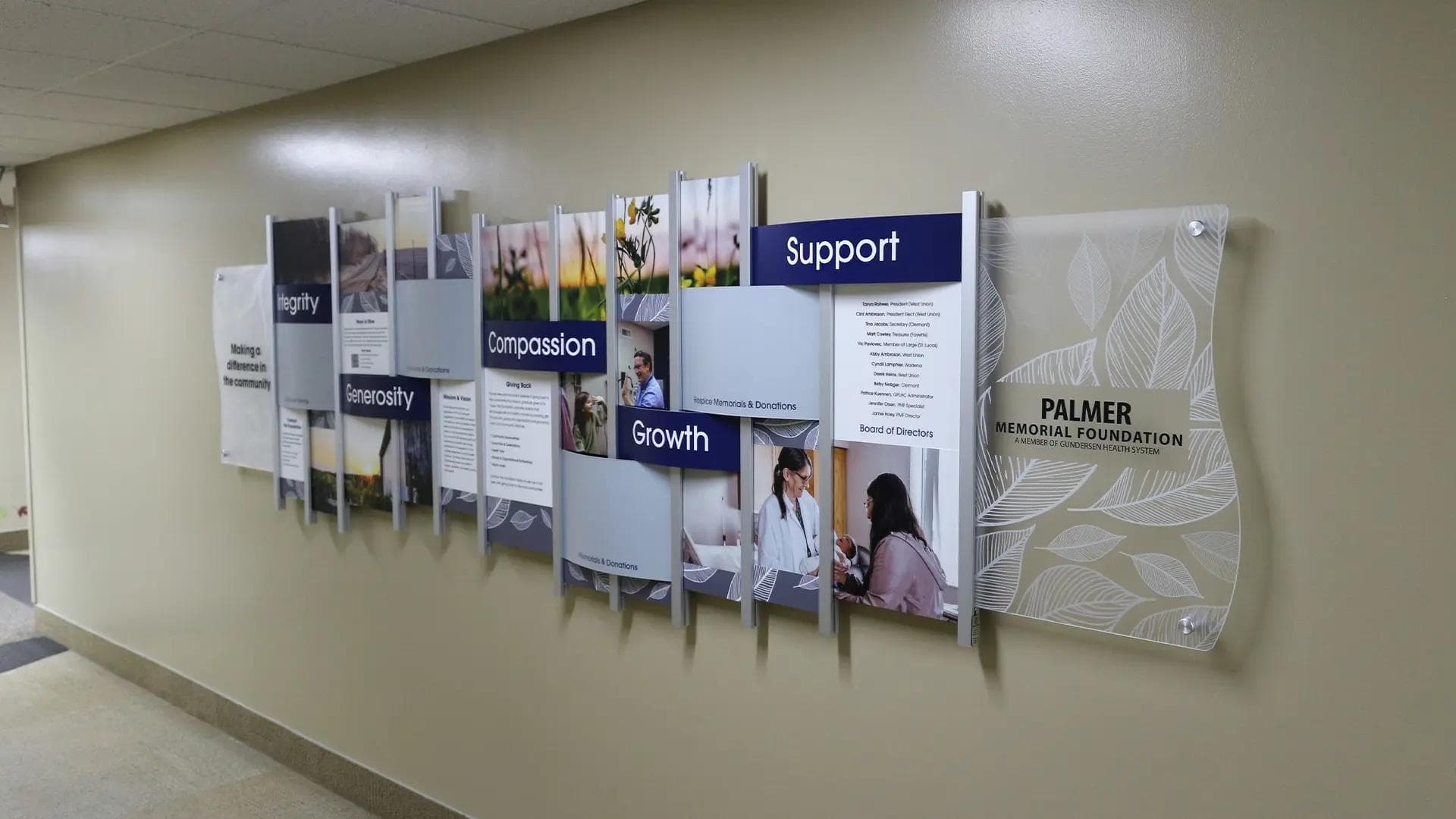
Palmer Memorial Medical Foundation Rail Donor Wall
Gundersen, Iowa
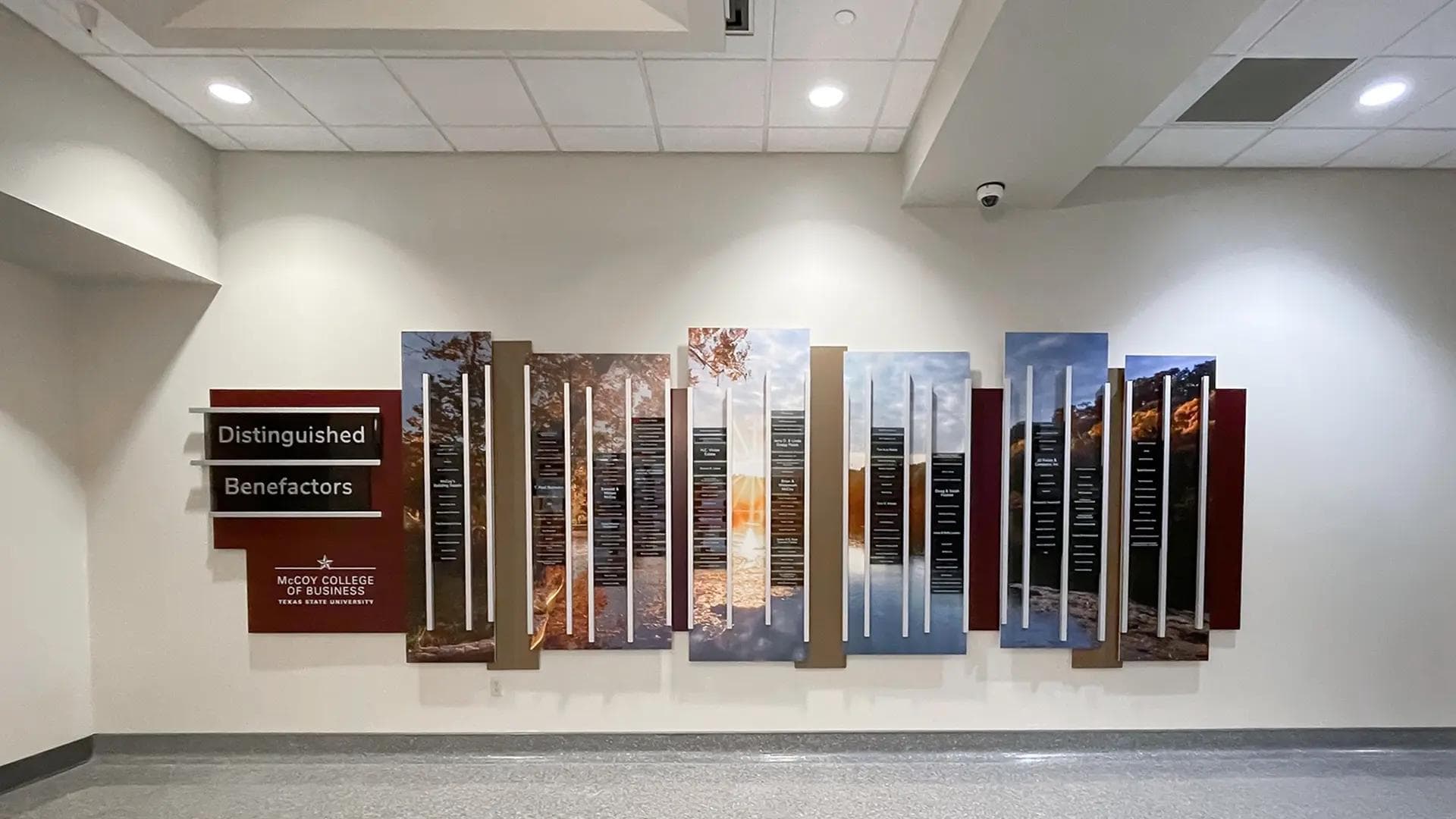
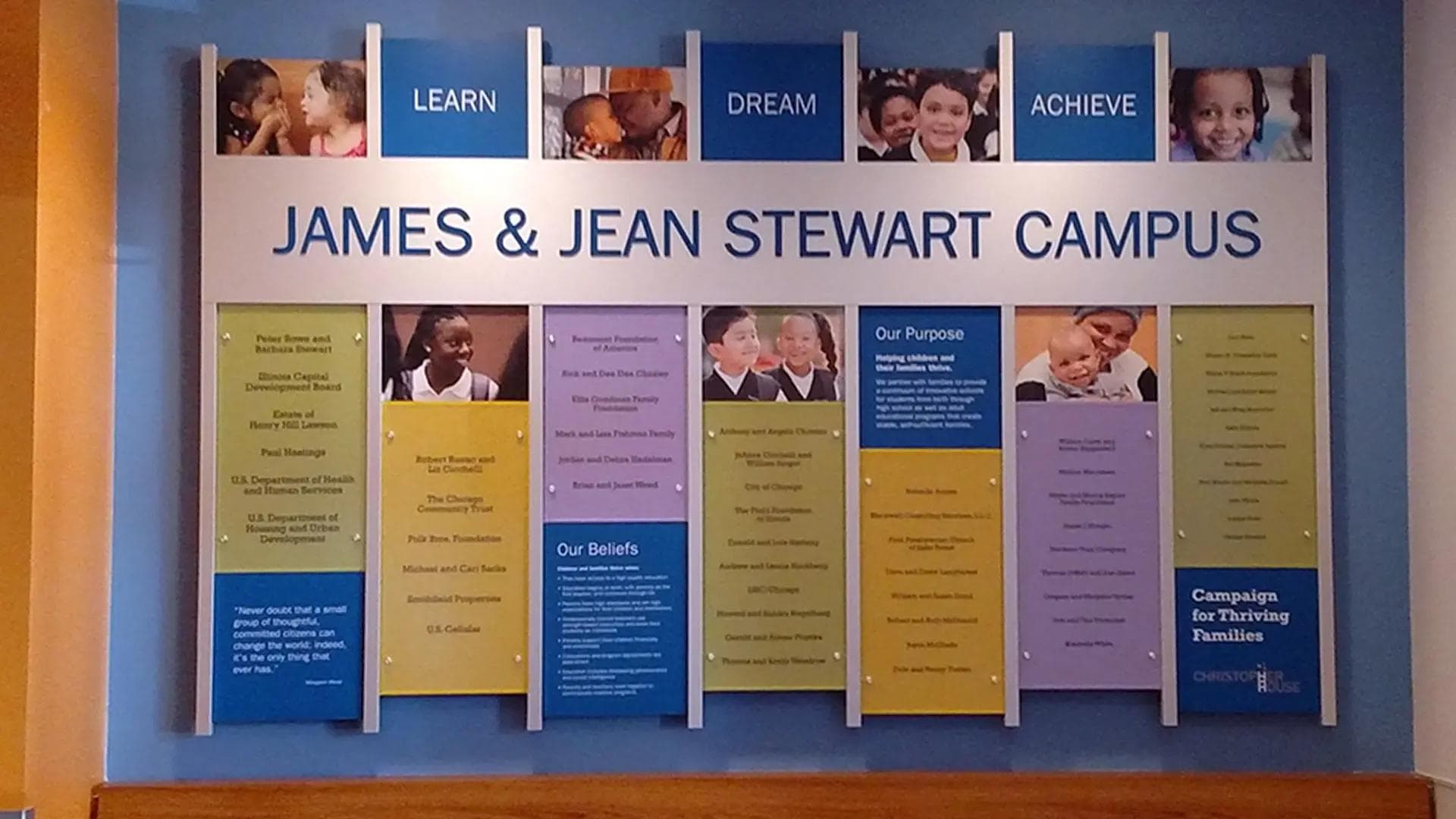
Universities & Schools
University, college, and K-12 donor recognition usually needs to hold institutional colors, mascot, and class-year structure while accommodating annual additions. Rail systems and panel walls handle the yearly cadence best. 31 installed education walls.
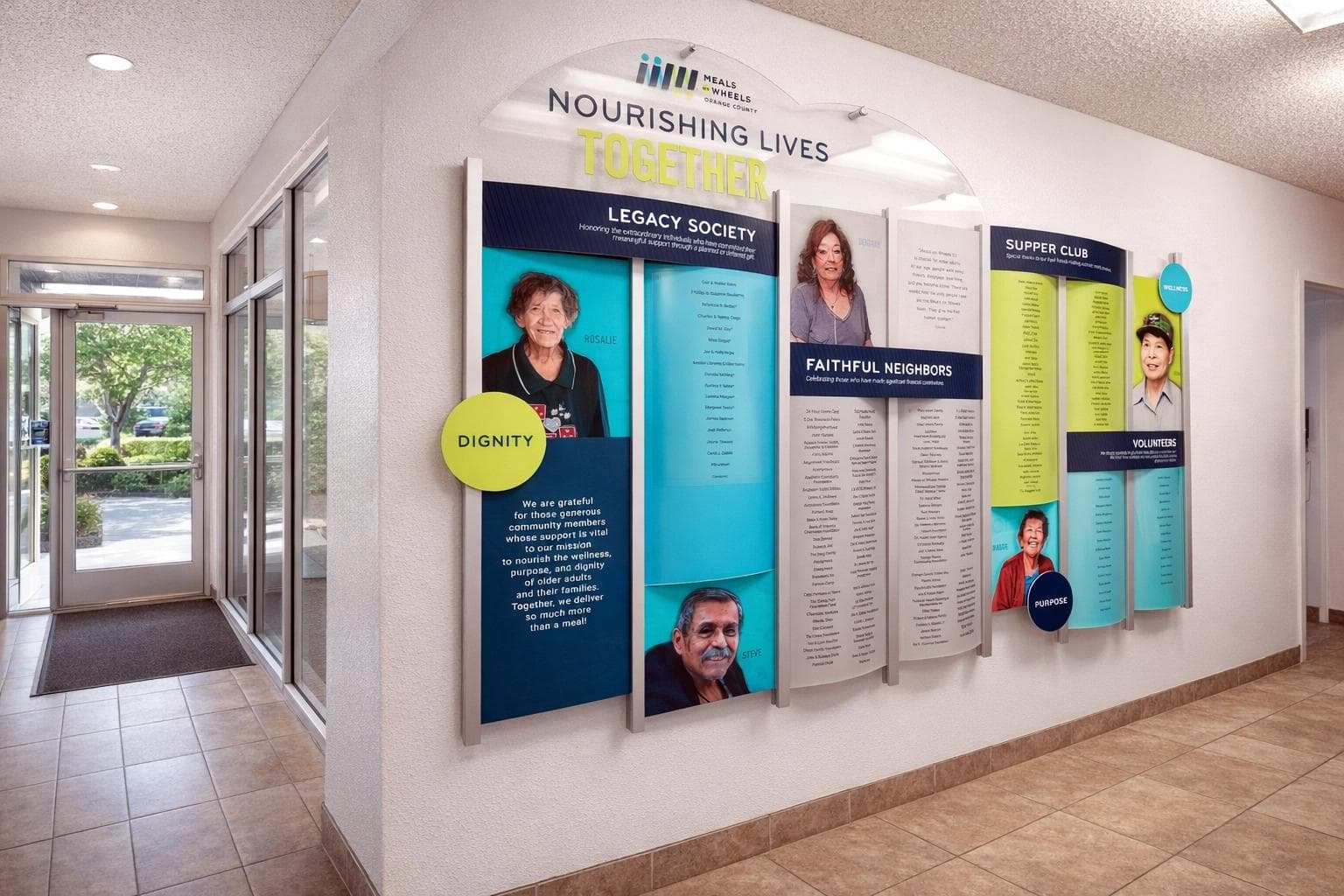
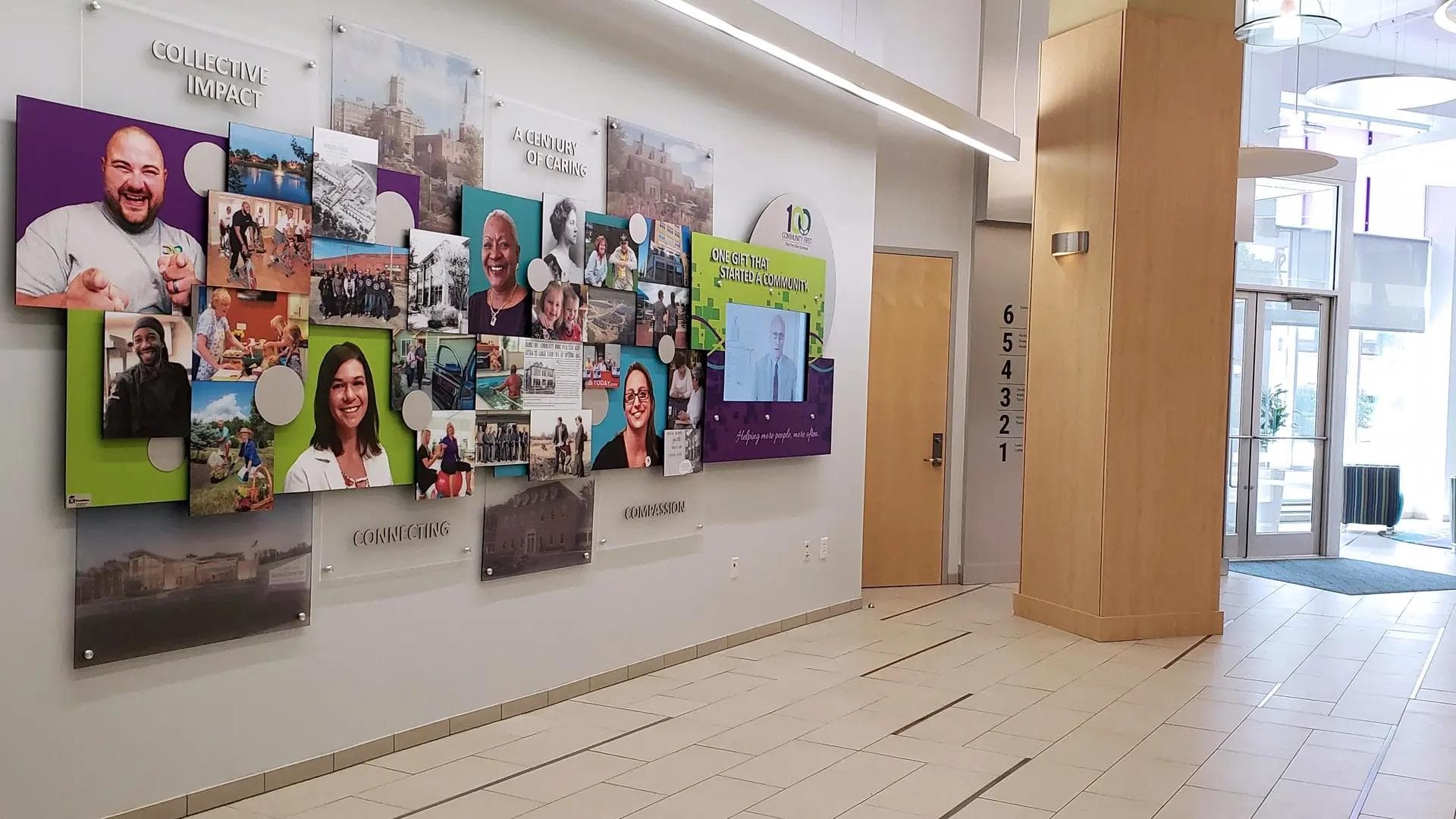
Nonprofits & Foundations
Nonprofit recognition has to stretch a budget and stay updateable, because the donor list is rarely final. Rail and panel systems dominate, usually carrying mission and impact content alongside the names. 50 installed nonprofit and foundation walls.
Churches & Faith Organizations
Church donor wall ideas tend toward symbolic form — flames, leaves, doves, stained glass effects — and toward memorial and legacy giving rather than campaign tiers. Sanctuary and narthex installations usually need to sit quietly inside existing millwork rather than announce themselves.

Congregation Adath Jewish Annual Partners Updateable Donor Wall
Elizabeth, NJ
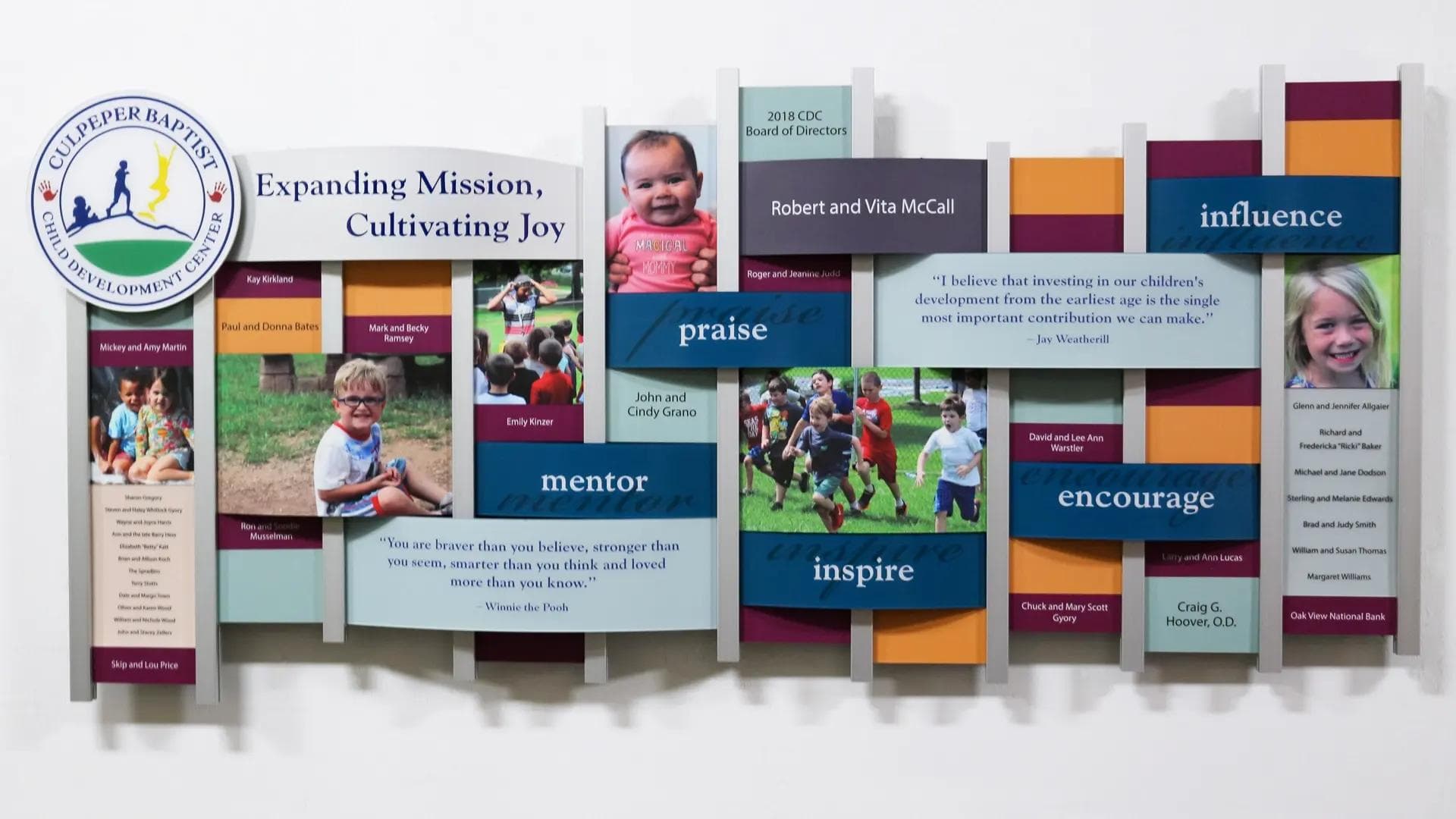
Baptist Child Development Center Donor Wall
Culpeper, VA
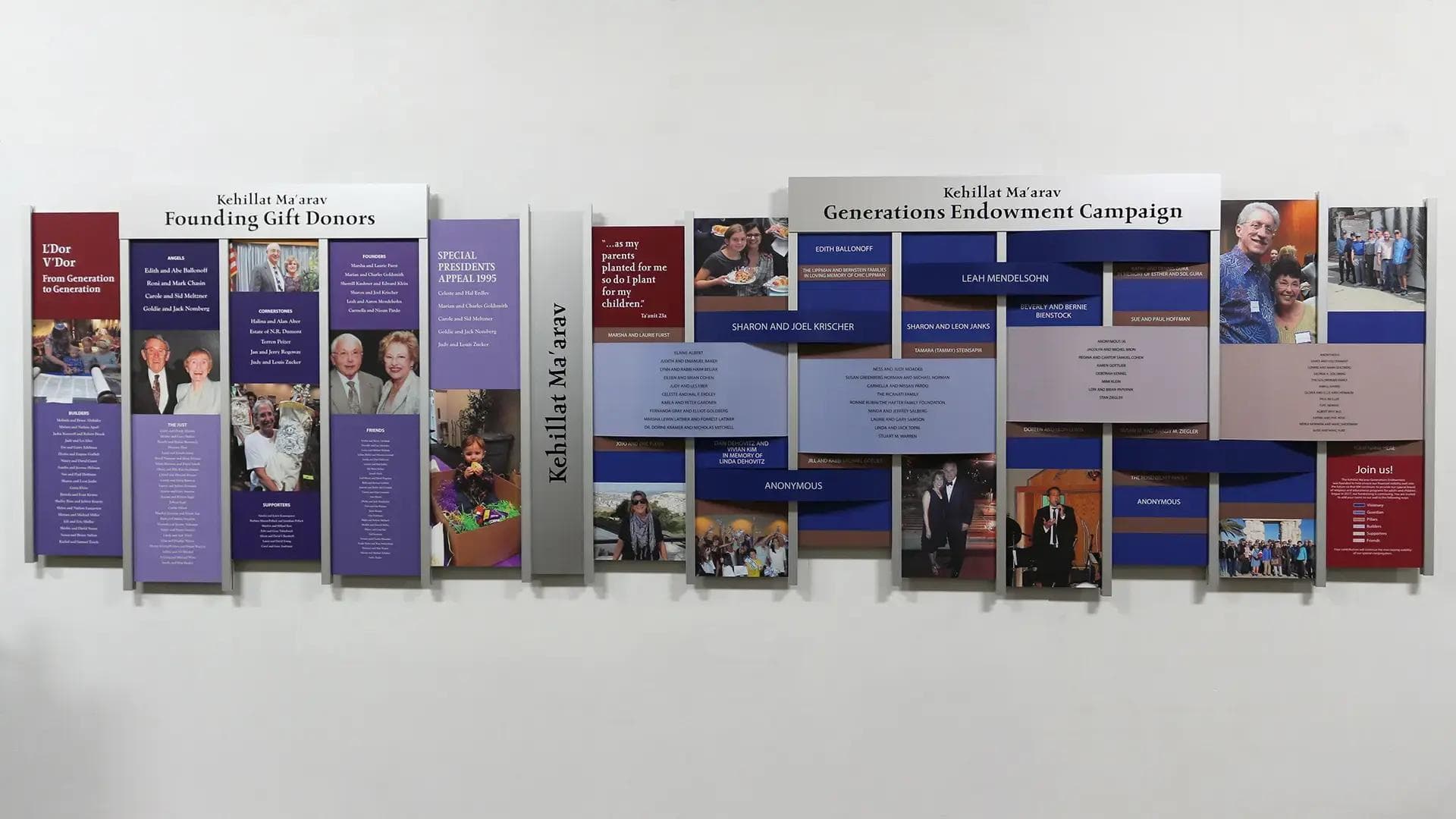
Jewish Parrish Endowment Campaign Donor Wall
Santa Monica, CA
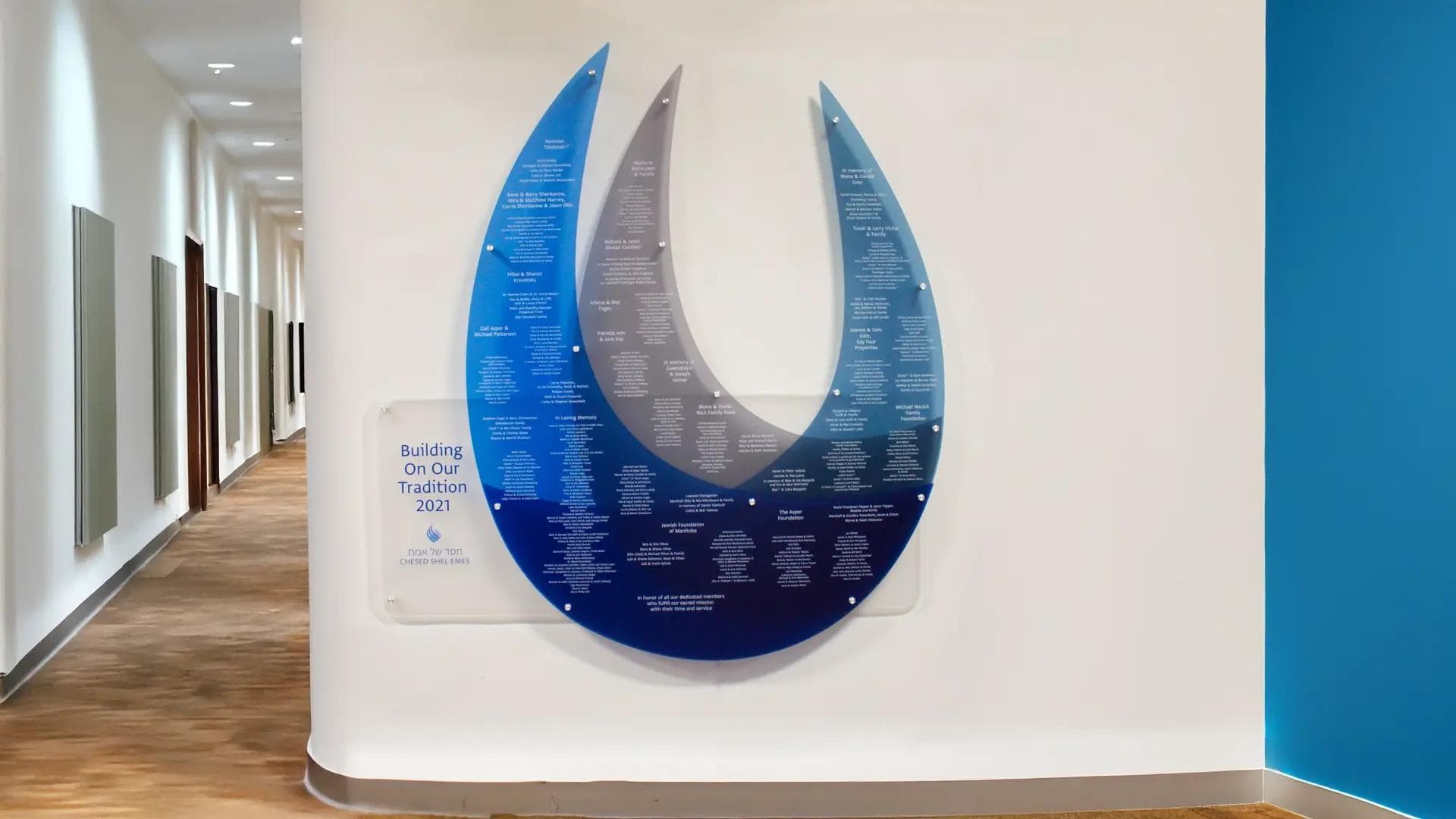
Chesed Building Campaign Donor Wall
St, Winnipeg, Manitoba CANADA
Corporate & Employee Giving
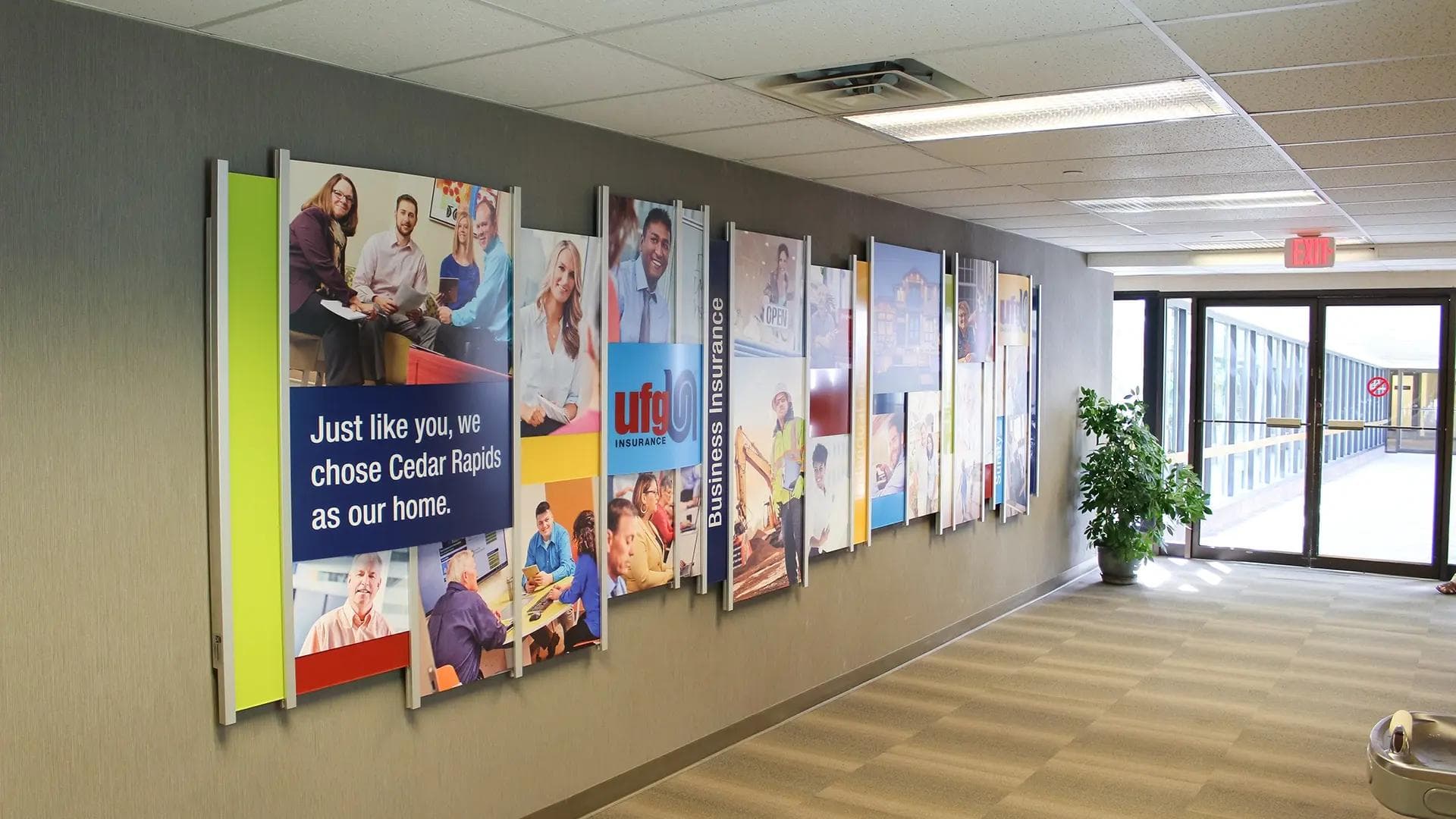
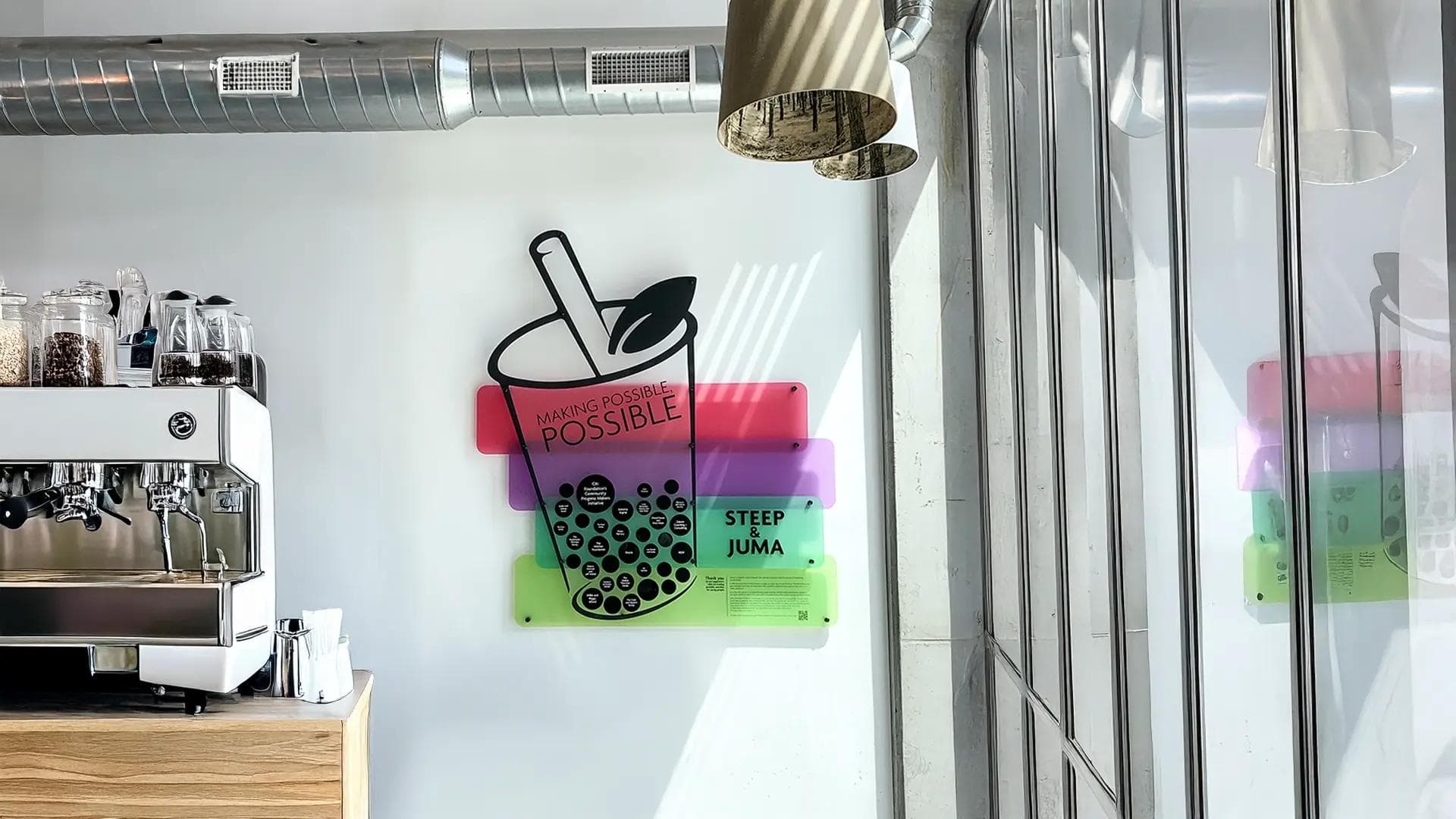
Corporate recognition walls carry brand standards first: exact Pantone matches, approved logo lockups, and typography from the brand guide. The content is usually employee giving totals, matched-gift programs, and community partners rather than individual major donors, which makes a digital format a natural fit.
Arts & Culture
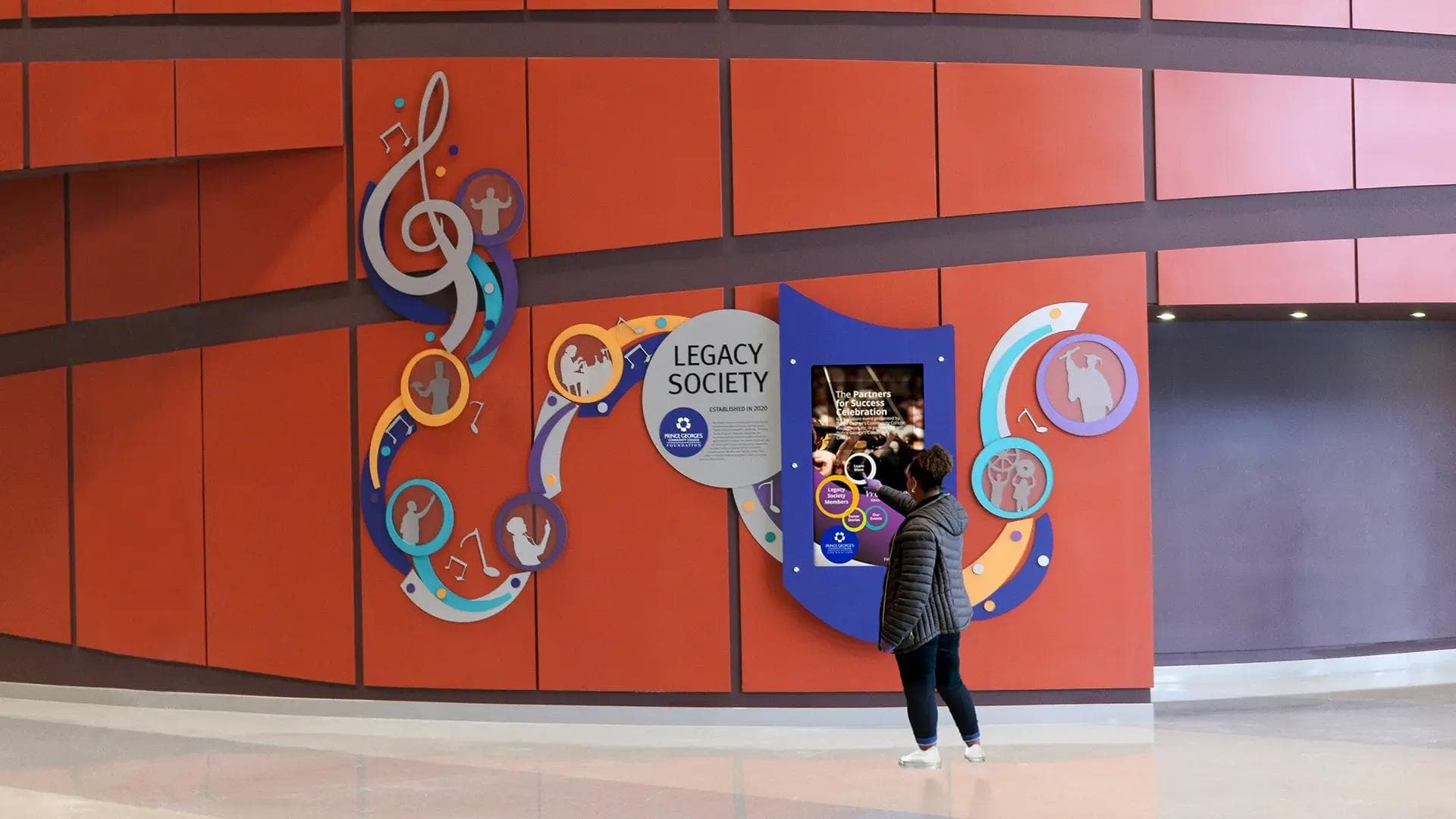
Museums, theaters, and zoos can be the most expressive. Recognition can borrow directly from the collection or programming, from treble clefs and theater masks to original animal photography.
See arts & culture donor wallsCapital Campaigns
Capital campaign walls need clear giving-level hierarchy and a permanent feel for lead gifts, often paired with an updateable zone for gifts that arrive after installation.
How to Choose Between Donor Wall Ideas
Work through these five questions in order. They narrow the options faster than browsing designs does.
- 1
Start with how often the wall will change
This single question eliminates most formats. A list that is final at installation can be engraved. A list that grows every year needs a rail system or a screen. Getting this wrong is the most expensive mistake in donor recognition.
- 2
Measure the wall and the viewing distance
Name height, panel count, and tier structure all follow from the wall dimensions and how far back people stand. A corridor wall viewed from four feet needs a different hierarchy than a lobby wall viewed from thirty.
- 3
Set giving levels before design, not after
Tier structure drives the visual hierarchy. Decide how many levels you are recognizing and roughly how many names sit in each, then design the composition around that distribution.
- 4
Decide what the wall says besides names
The strongest walls carry mission, impact, and story alongside recognition. Deciding this early determines how much of the surface is reserved for non-name content.
- 5
Plan the update process and who owns it
Someone has to add next year's donors. Whether that is a remote content update or an order for new plates, name the owner and the budget line before installation.
Once you have narrowed the format, our design-build process covers what happens next, and our case studies show the reasoning behind specific installed walls.
Donor Wall Ideas: Common Questions
What are the most popular donor recognition wall ideas right now?
Updateable formats dominate. Rail wall systems and digital donor walls are the two most requested because both let organizations add donors without rebuilding the wall. Among physical designs, layered dimensional panels and organic shapes such as leaves, hearts, and circles are the most common requests, usually combined with integrated LED lighting.
How much do different donor wall ideas cost?
Cost is driven by size, material, and how updateable the wall needs to be far more than by style. Plaques and small rail installations sit at the entry end, panel and tile walls in the middle, and interactive digital walls at the top because they include hardware and software. Our budget calculator gives a range based on your wall dimensions, donor count, and format.
What is the difference between a donor wall and a donor recognition wall?
Nothing — they are used interchangeably, along with donor board, donor display, and honor wall. Donor recognition wall is the more formal term common in fundraising and development offices, while donor wall is the shorter everyday version.
What makes a modern donor wall design different from a traditional one?
Traditional recognition tends to be a dense, symmetrical grid of engraved plates in bronze or brass. Modern donor wall ideas use restrained palettes, generous spacing, dimensional layering, architectural materials, and integrated lighting, and they plan for expansion from the start rather than treating the list as final.
Can a donor wall be updated after it is installed?
Yes, if you choose a format designed for it. Rail systems let you swap individual plates, panel walls can be built with dedicated updateable zones, and digital donor walls update remotely with no physical change at all. Fully engraved single-surface walls are the hardest and most costly to change.
What works for an outdoor donor recognition wall?
Outdoor recognition has to survive UV, moisture, and freeze-thaw cycles, which rules out most interior materials. Powder-coated aluminum, engraved granite and stone, weather-sealed tile, and paver or brick campaigns are the formats that hold up. Digital displays outdoors are possible but need high-brightness, sealed enclosures, so most outdoor projects stay physical.
How many donor names can a wall display?
Physical walls are limited by surface area, name height, and viewing distance — a typical lobby panel wall holds a few hundred names comfortably. Digital donor walls are effectively unlimited because names scroll, paginate, or become searchable, which is why organizations with thousands of donors usually end up with a digital or hybrid approach.
Do you have donor wall examples we can show our committee?
Yes. Our gallery holds over 150 installed donor recognition walls organized by format, material, and feature, and our case studies walk through the goals and constraints behind specific projects. Both are built for sharing with a board or campaign committee.
Turn an Idea Into Your Donor Wall
Send us your wall dimensions and donor list structure. We will come back with design directions and a realistic budget range — no obligation.